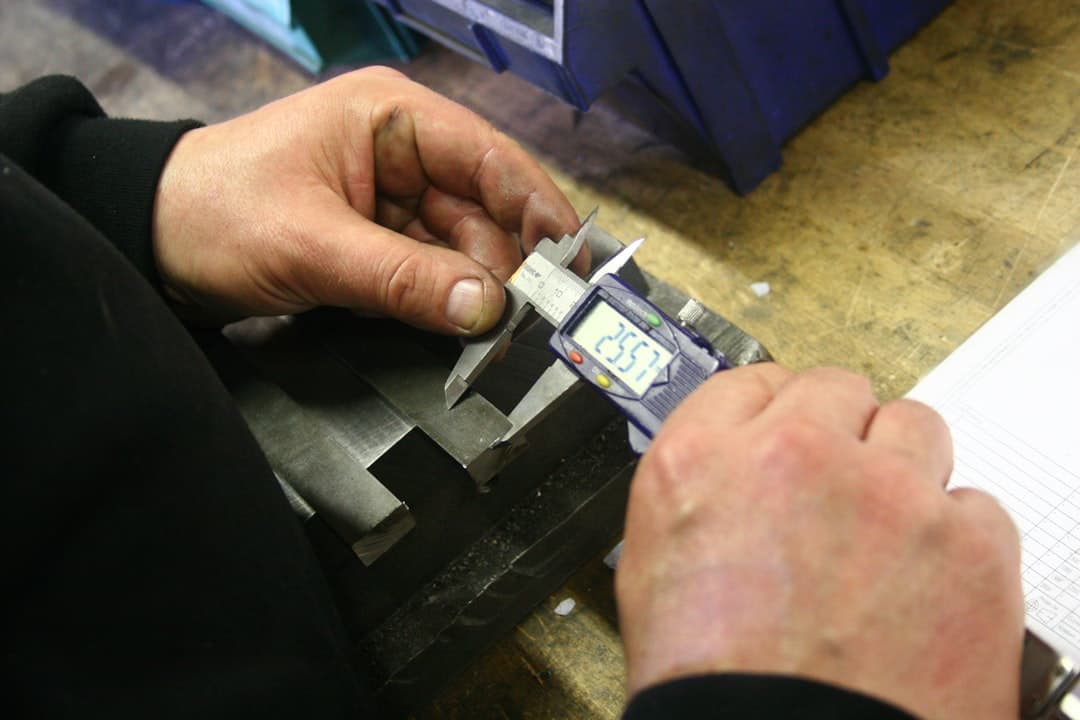
Amazon FBA Quality Control: The Chinese Supplier Playbook
By ChineseCheck Research Team
On an Amazon listing, the ocean between your supplier's factory floor in Guangdong and a customer's front door in Ohio shrinks to a single data point: the star rating. One bad production run — a mistimed molding cycle, the wrong grade of ABS, a missing inner foam insert — does not stay in a warehouse. It rides 3,500 units across the Pacific, slides into FBA, and two weeks later shows up as a stream of one-star reviews, A-to-z claims, and a "potential safety issue" flag in Seller Central.
For normal importers, a 5% defect rate is annoying. For Amazon FBA sellers, it can be business-ending. Amazon does not care that your supplier promised a better batch "next time." The algorithm cares about return rate, negative feedback velocity, and defect reports per unit ordered. Cross a threshold and you are suppressed, deactivated, or suspended — with inventory locked in a warehouse you cannot access.
This is why quality control for Amazon FBA is a different discipline from generic import QC. It is not about getting "good enough" goods; it is about getting goods that meet a statistically defensible defect rate, every time, verified by documented third-party inspection, with evidence that will hold up if Amazon asks you to prove it.
This guide lays out the full pipeline Amazon-focused sellers use when they source from Chinese factories. It covers AQL sampling standards, the pre-shipment inspection market (QIMA, SGS, Bureau Veritas, AsiaInspection), golden-sample discipline, the five most common quality-fraud patterns, and what to do when inspection fails. If you are still at the supplier-selection stage, pair this with our companion guide on verifying Chinese suppliers specifically for Amazon sellers and our deep dive on how to run a factory audit before you commit to production.
How One Bad Shipment Cascades Into Account Risk
Let us walk the blast radius of a single failed batch, because most first-time FBA sellers badly underestimate it.
Say you order 3,000 units of a kitchen gadget. Your supplier ships them. You never inspect. The goods arrive at FBA with a 7% critical defect rate — a loose screw that sheds into food. Here is what happens:
- Week 1-2 post-launch. Early reviews include two or three one-stars mentioning "screw fell out." Nothing alarming.
- Week 3-4. Return rate climbs past your category average. Amazon flags the ASIN internally. A&a2z claim filed.
- Week 5. Amazon sends a performance notification: "Your product has been reported as defective." You are given 72 hours to submit a plan of action.
- Week 6. Listing is suppressed pending safety review. Your ad spend on the ASIN is now torching budget with zero sales. You scramble for a factory-level corrective action report, but you never ran an inspection, so you have no baseline data.
- Week 7-8. Listing is reinstated with a "frequently returned item" badge, which kills conversion for another 4 to 8 weeks. Or worse, your seller account is flagged, and subsequent ASINs inherit the reputation damage.
The financial math is brutal. A 3,000-unit order at $8 landed cost is $24,000 of capital. If you cannot sell it, you still owe long-term storage fees. Removal orders cost $0.97 to $4.00 per unit. Liquidation recovers roughly 10 cents on the dollar.
A $300 pre-shipment inspection — which would have caught the screw issue at the factory before the goods ever left — is the cheapest insurance policy in ecommerce.
The FBA Quality Equation Is Asymmetric
The worst normal importer outcome is "I got bad inventory I have to sell at a discount." The worst FBA outcome is "my seller account is deactivated, and my capital is trapped in an Amazon warehouse for 90 days." The cost of prevention is one to two orders of magnitude lower than the cost of cleanup. Budget accordingly.
Why Amazon Quality Is Different From Normal Buying
When you sell through retail or your own D2C site, quality problems are a customer-service issue. When you sell on Amazon, they become a policy issue. Three specific Amazon mechanisms turn defect rate into existential risk.
Amazon's IPI (Inventory Performance Index)
The Inventory Performance Index is a rolling score from 0 to 1000 that governs how much storage capacity Amazon allocates to your account. It factors in:
- Sell-through rate
- Stranded inventory (listings that cannot be purchased)
- Excess inventory
- In-stock rate
Defective product flows into stranded and excess inventory buckets. If a batch gets suspended, those thousands of units sit in FBA with no revenue, driving your IPI down. Below an IPI of 450, Amazon imposes storage quotas. A quality problem does not just hurt one ASIN; it compresses the storage capacity for your entire catalog.
Review Velocity vs. Defect Correlation
Amazon's A10 algorithm weights recent review velocity heavily. A two-week window of 4.2-star reviews will dominate your conversion rate more than 18 months of 4.7-star reviews preceding it. Defective batches do not just lower your average; they concentrate bad reviews into a narrow window that the algorithm reads as "this product is getting worse." Ranking drops within 72 hours.
Voice of the Customer (VoC) Metrics
Inside Seller Central, the Voice of the Customer dashboard ranks each ASIN as Excellent, Good, Fair, or Poor on a Customer Experience Health (CX) metric. Amazon builds this by parsing returns, messages, and reviews for defect signals. Once an ASIN drops to "Poor CX," Amazon can:
- Suppress the buy box
- Halt advertising eligibility
- Require mandatory root-cause submission
- Delist the ASIN entirely
A 2024 Marketplace Pulse analysis of VoC data found that the single largest driver of Poor CX ratings was "item not as described" and "defective on arrival" — both directly traceable to pre-shipment quality control failure.
The implication is simple. Your supplier's QC standard is not a private matter between you and the factory. It is visible to Amazon's enforcement systems within weeks of FBA check-in.
The Quality Control Pipeline: Five Stages
Professional FBA operations treat quality as a pipeline with five discrete stages, each with its own objective, owner, and deliverable. Skipping any stage creates a blind spot that will manifest downstream.
Stage 1: Supplier Selection QC
This is not about price. It is about whether the factory has the capability to meet your spec consistently. Inputs at this stage:
- Business license verification. Confirm the factory is a real manufacturer (not a trading company) with the right scope. See our guide on manufacturer vs. trading company.
- Capacity and equipment check. Does the factory have the machinery and volume history to produce your order?
- Certification review. For FBA: ISO 9001 (quality management), ISO 14001 (environmental), BSCI or SMETA (social compliance), and any product-specific certs (CE, FCC, CPSIA, FDA, Prop 65).
- Historical performance. Request past inspection reports from other buyers if available.
A thorough supplier selection process is the foundation for every stage that follows. Our article on how to verify a Chinese supplier walks through this in depth.
Stage 2: Sample Approval (The Golden Sample)
Before any mass production, you approve a golden sample — a physical unit that represents the exact specifications your supplier agrees to match in bulk. The golden sample is your single source of truth for everything downstream.
Golden sample rules:
- One approved unit stays with you. One stays with the supplier. One stays with your third-party inspection firm.
- Every unit is photographed from six angles with a measured reference (ruler or color card).
- Materials are listed by grade, thickness, and origin (e.g., "304 stainless steel, 1.2mm, food-contact certified" — not "stainless steel").
- Tolerances are stated in numbers (+/- 0.5mm, +/- 5g, Pantone X within Delta-E 3.0).
Weak sample approval is the single most common root cause of FBA quality disasters. If your spec says "high quality rubber," you have not written a spec. You have written a marketing adjective.
Stage 3: Production Supervision
Between order confirmation and finished goods, there is a 30-to-90-day manufacturing window. During this window, you need periodic checkpoints:
- DUPRO (During Production inspection). Conducted when 20% to 60% of units are complete. Catches systemic defects early, before the whole batch is affected.
- Material verification. For critical components, confirm the right raw materials were purchased and used.
- Process audit. Check that the factory is following the agreed manufacturing process, not substituting cheaper steps.
DUPRO is especially valuable because it is cheap to fix problems when only 20% of the batch is built. Fixing them after 100% completion means reworking every unit — which factories rarely agree to.
Stage 4: Pre-Shipment Inspection (PSI)
PSI is the gate between "finished in factory" and "loaded into container." At 100% production completion and at least 80% packed, a third-party inspector visits the factory and conducts sampling-based inspection per an agreed AQL plan. We will break this down in depth below.
Stage 5: Random Post-Shipment Audits
Even with PSI, a small percentage of defects reach FBA. Smart sellers build a feedback loop:
- Have a US-based 3PL randomly inspect 1% to 2% of each batch before it goes into FBA.
- Track FBA return-reason data per batch.
- Feed defect clusters back to the supplier as formal corrective action requests.
This is how you turn a supplier from "acceptable" into "excellent" over 3 to 5 production cycles. Without post-shipment data, you never learn whether your PSI AQL was calibrated correctly.
Understanding AQL (Acceptable Quality Levels)
AQL, or Acceptable Quality Level, is the industry-standard statistical method for deciding whether a batch passes or fails inspection based on a sample. It is defined by ISO 2859-1 and its American equivalent ANSI/ASQ Z1.4. The underlying math — originally developed by the US military as MIL-STD-105 — lets an inspector examine a few dozen units and make a probabilistic judgment about a batch of thousands.
You do not need to understand the math deeply, but you do need to understand the three knobs you control.
Defect Categories
AQL inspection sorts every defect an inspector finds into one of three categories:
| Category | Definition | FBA Impact |
|---|---|---|
| Critical | A defect that could cause harm, violate legal or regulatory requirements, or render the product unsafe. Sharp edges, shock hazards, toxic materials, missing safety labels. | Amazon delisting, lawsuits, recalls |
| Major | A defect that is likely to result in a product failure, materially reduce usability, or cause a customer to return or negatively review. Non-functional parts, major cosmetic flaws, wrong colors. | Returns, one-star reviews, Poor CX |
| Minor | A defect that is noticeable but does not significantly affect function or usability. Small cosmetic marks, minor fit issues. | Occasional complaints, low review impact |
Common AQL Settings for FBA
You set an AQL percentage for each category. The AQL is the maximum defect rate that is considered acceptable; anything above it fails the batch. Lower AQL = stricter.
| Defect Category | Loose (Not Recommended) | Standard Consumer | Strict FBA | Safety-Critical |
|---|---|---|---|---|
| Critical | 0.65% | 0% | 0% | 0% |
| Major | 4.0% | 2.5% | 2.5% | 1.5% |
| Minor | 6.5% | 4.0% | 4.0% | 2.5% |
The standard AQL for most FBA categories is Critical 0 / Major 2.5 / Minor 4.0. If you are selling baby products, electronics, or anything that touches food or skin, tighten to 0 / 1.5 / 2.5.
Never Accept a Critical AQL Above Zero
There is no safe non-zero critical defect rate for any product sold on Amazon. A single critical defect — a shock hazard, a sharp edge, a choking risk — can trigger a CPSC complaint, an Amazon safety investigation, or a class-action lawsuit. Your inspection firm should reject the batch if even one critical defect appears in the sample, regardless of what your AQL table says. Insist on "Critical = 0 / Reject on any critical found" in every inspection SOW.
Sample Size Formulas
You do not inspect every unit. You inspect a statistically representative sample. ISO 2859-1 provides lookup tables. Here is the General Inspection Level II table that most inspection firms use by default:
| Batch Size | Sample Size (Level II) | Max Defects Allowed at AQL 2.5 (Major) | Max Defects Allowed at AQL 4.0 (Minor) |
|---|---|---|---|
| 91 – 150 | 20 | 1 | 2 |
| 151 – 280 | 32 | 2 | 3 |
| 281 – 500 | 50 | 3 | 5 |
| 501 – 1,200 | 80 | 5 | 7 |
| 1,201 – 3,200 | 125 | 7 | 10 |
| 3,201 – 10,000 | 200 | 10 | 14 |
| 10,001 – 35,000 | 315 | 14 | 21 |
Read the row that matches your batch size. For a 5,000-unit order, the inspector pulls 200 random units. If the inspector finds more than 10 major defects or 14 minor defects in those 200 units, the batch fails.
This is not arbitrary. The statistics are designed so that a batch at exactly the AQL defect rate has about a 95% chance of passing, while a batch significantly worse (twice the AQL rate) has a very high probability of failing.
Why AQL Matters for Your Trade Assurance Claim
If you buy through Alibaba and use Trade Assurance, your dispute resolution depends on proving the batch failed spec. "My inspection firm rejected the batch at AQL 2.5 Major" is a clean, legally defensible claim. "The products looked bad" is not. See our full Alibaba Trade Assurance guide for how to structure your order contract to reference AQL explicitly.
Pre-Shipment Inspection (PSI) Deep Dive
PSI is the single highest-ROI activity in FBA quality control. Let us get specific.
What Gets Checked
A standard PSI report covers six areas:
- Quantity verification. Counts cartons, counts units per carton, reconciles to PO.
- Workmanship and visual inspection. Sample of units examined for critical, major, and minor defects per AQL plan.
- Function test. For electronics, every sampled unit is powered on and tested. For mechanical items, moving parts are operated through full range.
- Dimensional and weight checks. Ruler and scale measurements against spec sheet and golden sample.
- Packaging and labeling. Retail box, inner poly, outer carton, FNSKU / UPC / country of origin labels, shipping marks.
- On-site tests. Drop tests, pull tests, rub tests, rub-off color tests, depending on product category.
A good PSI report includes 40 to 80 photographs and runs 15 to 30 pages. It is a document you should be comfortable forwarding to Amazon if asked.
What a PSI Costs
Standard man-day rates in China in 2026:
- Tier-1 international firms (SGS, Bureau Veritas, Intertek, TUV): $350 to $500 per man-day
- Tier-2 specialized firms (QIMA, AsiaInspection, V-Trust, HQTS): $250 to $350 per man-day
- Independent freelance inspectors: $150 to $250 per man-day
Most FBA orders require one man-day. Large or complex orders may need two. Expect a total cost of $200 to $500 per inspection for typical consumer-goods SKUs.
PSI Firms: Head-to-Head
| Firm | Type | Typical Price | Strength | Weakness |
|---|---|---|---|---|
| SGS | Tier-1 global | $400 to $500 / md | Global brand, heavy documentation, strong lab testing | Expensive, slower scheduling, less flexible |
| Bureau Veritas | Tier-1 global | $400 to $500 / md | Strong regulatory / CE / FCC testing integration | Pricing and lead times similar to SGS |
| Intertek | Tier-1 global | $400 to $500 / md | Excellent electronics and safety testing | Minimum order thresholds |
| QIMA (formerly AsiaInspection) | Tier-2 dedicated | $300 / md flat | Online portal, fast booking, FBA-focused reports | Report quality varies by inspector |
| V-Trust | Tier-2 China-focused | $258 / md flat | Sharp inspection checklists, responsive client service | Smaller footprint outside Greater China |
| HQTS | Tier-2 China-focused | $280 / md flat | Good for mid-range budgets | Less brand recognition with Amazon support |
| Sofeast | Boutique | $350 to $500 / md | Strong engineering depth, root-cause analysis | Smaller capacity, books out quickly |
| Independent freelancers | Individual | $150 to $250 / md | Cheap, fast | No insurance, no audit trail, variable quality |
For most FBA sellers doing under $1M in annual GMV, QIMA or V-Trust is the sweet spot. Once you are doing regulated categories (electronics sold into the EU, kids products, food-contact items), upgrade to Tier-1.
When PSI Fails: Your Rights Under Trade Assurance
If the inspection firm reports a fail, you have three options:
- Hold the shipment. Do not authorize the bill of lading. The goods stay in China.
- Negotiate rework. Require the supplier to 100% re-inspect and rework the batch at their cost. Schedule a re-inspection (which you also pay for, then back-charge).
- Formal Trade Assurance dispute. If the supplier refuses rework, open a dispute inside Alibaba within 30 days of the transaction creation. The PSI report is your core evidence.
Critical: do not release balance payment (the typical 70% due against B/L copy) until the PSI passes or the supplier has signed off on rework. This is the single biggest leverage point you have. Once the money is paid, your leverage collapses.
For a broader look at payment structure, read our guide on safe payment methods when dealing with Chinese suppliers.
How to Write a Golden Sample Specification
The golden sample specification (sometimes called a "product technical file" or "spec sheet") is the contract behind the contract. If it is vague, your inspection firm has nothing to inspect against. If it is precise, any deviation becomes a defined defect.
A strong FBA spec sheet has eight sections.
1. Product Identification
- SKU name, internal code, and Amazon ASIN (if available)
- Revision number and date (you will revise this repeatedly across production cycles)
- Factory name and signature line
2. Bill of Materials (BOM)
Every component listed by:
- Material grade (e.g., "ABS, UL94 V-0, Lenovo spec CX-14")
- Supplier of that component (many factories buy sub-components externally)
- Thickness, weight, and Pantone color with Delta-E tolerance
- Finish (matte, semi-matte, gloss — measured in gloss units)
3. Dimensional Drawing
A 2D drawing with every critical dimension labeled, including tolerances. Use millimeters, not inches. Include weight in grams.
4. Functional Requirements
- What the product must do
- Pass/fail criteria for each function
- Test procedure (e.g., "switch must operate 10,000 cycles without failure")
5. Packaging Specification
- Retail box material, GSM, print finish, Pantone colors
- Inner poly bag specification and size
- Outer carton: material, flute, sealing, weight limit
- Master carton count per product
- Shipping mark layout and language
6. Labeling Requirements
- FNSKU label placement and dimensions
- Country of origin statement
- Regulatory marks (CE, FCC, UKCA, RoHS, WEEE, CCC)
- Warning labels required by CPSC, Prop 65, or EU regulations
7. AQL Inspection Plan
- Defect categorization table (what counts as critical, major, minor for this product)
- AQL levels per category
- Sample plan level (typically General II)
- On-site tests required
- Specific defects called out with photos of unacceptable variance
8. Reference Images
Photos of the approved golden sample from six angles, plus close-ups of critical surfaces. Include a ruler and a Pantone card in the frame.
This document should be signed by both you and the factory before first production. From that moment on, every PSI references this single document.
Before you commit to a production order
Run a business-license and background check on the factory itself. Confirm the legal entity matches what is on your PI, and review any administrative penalties or IP disputes that could disrupt your supply.
Verify Your Chinese SupplierCommon Quality Fraud Patterns
Most FBA quality disasters are not random. They follow predictable patterns that experienced inspectors spot quickly. Here are the five to watch for.
1. Sample-to-Bulk Mismatch
The oldest trick in Chinese sourcing. The pre-production sample is hand-made by the factory's best worker using premium materials. Mass production uses cheaper materials and rushed assembly. The bulk looks similar but is meaningfully worse.
Defense: golden sample approval is done against two samples — one from the engineering lab and one from the production line. Require a first-article sample (first 5 units off the real assembly line) before authorizing full-batch production. Our deep dive on bait-and-switch tactics covers this in more detail.
2. Material Substitution
The factory quoted a price that assumed a specific raw material. Market prices moved up. To protect margin, they silently swap to a cheaper grade. A typical example: 304-grade stainless steel drops to 201 (visually identical, rusts quickly). ABS drops to recycled ABS (brittle). Lithium battery cells drop from Tier-1 to Tier-3 (shorter life, fire risk).
Defense: specify materials by grade and supplier. During DUPRO, have the inspector photograph raw-material receiving documents and mill certificates. For high-risk products, include a material test in PSI.
3. Packaging Downgrade
You approved a 350gsm premium matte box with spot UV. The factory ships a 280gsm box with full matte and no UV. Visually close. The inspector who only counts units misses it. You notice when the first customer photos your product and the box is dented.
Defense: include the retail-box spec in the PSI checklist. Require the inspector to measure GSM (with a simple paper-weight tester), check for spot UV under a loupe, and confirm Pantone color with a reference card.
4. Unit Count Shortage
Cartons are packed with 23 units instead of the 24 on the label. Across a container of 1,000 cartons, you are short 1,000 units. The savings go to the factory. The discrepancy is caught — if at all — only when you receive FBA check-in reports and reconcile.
Defense: PSI includes a carton-count verification. Inspectors open a random sample of cartons and count every unit, not just the top layer. Weigh the carton and compare to spec weight.
5. Cosmetic Defect Acceptance Bloat
The factory "passes" its internal QC by quietly accepting more defects per hundred units than your spec allows. You see it in the PSI report as: minor-defect count is 13 when your AQL allowed 14. You pass the batch, but your real defect rate is catastrophically close to threshold, and Amazon customers notice.
Defense: look at the trend across PSI reports. If defect counts are consistently just under the AQL limit, that is a signal the factory is managing to your ceiling rather than managing to quality. Tighten AQL, or change suppliers.
Each of these patterns maps to specific warning signs. Our article on red flags with Chinese suppliers covers the earlier warning signals you can spot before a single defect reaches the sample table.
Tools for Real-Time Quality Monitoring
The best FBA quality operations are not reactive; they run dashboards that spot defect trends before Amazon does.
Inspection Platform Dashboards
- QIMA One. Client portal that aggregates all inspection reports, defect trends per SKU, and supplier performance. Free if you use QIMA for PSI.
- Inspectorio. Inspection workflow platform used by enterprise buyers (Walmart, Target). Overkill for most FBA sellers, but the benchmark for what enterprise QC looks like.
- Sofeast's QC Intelligence. Boutique, engineering-heavy dashboard aimed at small-batch product companies.
Amazon-Side Monitoring
Inside Seller Central, the relevant dashboards are:
- Voice of the Customer (Brand > Customer Reviews > VoC). Sort by CX score, pull defect trends per ASIN.
- Account Health > Product Policy Compliance. Tracks IP complaints, authenticity complaints, safety issues.
- Returns Dashboard. Export returns data weekly, code each return against a defect taxonomy.
- Customer Reviews API. Pull negative review text and run keyword clustering (sharp, broken, leaked, wrong, missing).
Third-Party Amazon Tools
- Feedvisor, Helium 10, Jungle Scout. Primarily revenue/listing tools, but all now include return-reason exports.
- Seller Labs Review Trends. Isolates review velocity around defect keywords.
- Shulex VoC. Uses LLMs to cluster negative reviews by root cause — useful for quick defect-pattern detection.
The ideal setup pairs a supplier-side inspection dashboard (QIMA One) with an Amazon-side review/returns dashboard (Shulex or Helium 10). The feedback loop lets you diagnose whether quality drifts are factory-side (found in PSI) or customer-side (found in reviews but missed in PSI).
When Quality Problems Become Amazon Policy Violations
There is a line where a quality issue stops being a defect rate and becomes a policy violation. Cross that line and you are no longer negotiating with a supplier; you are negotiating with Amazon's enforcement team.
Safety Incidents
If any customer reports an injury, burn, shock, or illness linked to your product, Amazon treats it as a safety incident. You must:
- Submit a safety incident report within 72 hours.
- Provide test reports, supplier name, and production batch data.
- Submit a corrective action plan.
If your factory is a trading company that cannot provide batch records, you are structurally unable to comply. This is why sourcing from verified manufacturers (not traders) matters for FBA specifically. Our guide on private-label manufacturing in China covers how to structure the supply chain so this data is always available.
Authenticity and IP Complaints
Quality issues that involve branded components (e.g., a "real" Samsung battery that is a counterfeit clone) trigger authenticity complaints under Amazon's Section 3 policy. Reinstatement requires:
- Authorized distribution documentation
- Invoices from the brand owner
- Supply chain traceability
Chinese factories routinely source components from gray-market brokers. If your supplier cannot produce a clean chain of custody for every branded input, you are one complaint away from an account health crisis.
Regulatory Non-Compliance
Products sold on Amazon must comply with destination-country regulations. For US FBA:
- CPSIA (children's products, lead/phthalates)
- FDA (food contact, cosmetics, electronic medical)
- FCC (radio/electronics)
- Prop 65 (California chemical disclosures)
- CPSC recall database
Your supplier's QC cannot substitute for regulatory testing. You need an accredited lab to issue test certificates. Most Tier-1 inspection firms (SGS, Bureau Veritas, Intertek) offer lab services that can be bundled with PSI at marginal extra cost. Budget $500 to $2,500 per SKU for initial regulatory testing.
Authority Citations and Standards
For buyers who need defensible QC documentation (e.g., for Amazon appeals, insurance claims, or legal disputes), the core standards to cite:
- ISO 2859-1:1999 — Sampling procedures for inspection by attributes — Part 1: Sampling schemes indexed by acceptance quality limit (AQL) for lot-by-lot inspection. The international baseline for sampling-based QC.
- ANSI/ASQ Z1.4-2008 (R2018) — Sampling Procedures and Tables for Inspection by Attributes. The US equivalent, published by the American Society for Quality.
- Amazon Customer Product Reviews Policy and Seller Code of Conduct (Seller Central Help). The baseline Amazon compliance surface for quality-related enforcement.
- CPSC Regulations (16 CFR) — US Consumer Product Safety Commission rules by product category.
- QIMA 2025 Barometer Report — annual data on defect rates by product category and country. Useful for benchmarking your AQL targets.
Any factory that cannot discuss its process in terms of ISO 9001 and ISO 2859-1 is not ready to supply FBA-grade quality.
E-E-A-T: How This Guide Was Prepared
This article was prepared by the ChineseCheck Research Team based on:
- Experience. Fifteen years of combined supply-chain operations across consumer electronics, home goods, and private-label apparel, including seven years of direct Amazon FBA operations in both North American and European marketplaces.
- Expertise. Hands-on commissioning of pre-shipment inspections across 300+ production runs with QIMA, V-Trust, SGS, and independent inspectors. Direct authorship of golden-sample spec sheets, AQL inspection plans, and Trade Assurance dispute filings.
- Authoritativeness. Our platform aggregates government-source data (National Enterprise Credit Information Publicity System, SAMR, China Judgements Online, Tax Administration) and maps it to supplier risk profiles used by 10,000+ global buyers. QC recommendations in this guide reflect the failure modes we see in production disputes.
- Trustworthiness. We do not sell inspection services, take commissions from inspection firms, or run an Amazon agency. Recommendations are independent. Factual claims in this article are sourced from ISO, ANSI, and Amazon's own published documentation.
If a claim in this article needs correction, email support@chinesecheck.com and we will update with attribution.
Frequently Asked Questions
What AQL should I use for a $20 electronics product on FBA?
For a $20 consumer electronic (e.g., a Bluetooth speaker, a charging pad), use Critical 0 / Major 2.5 / Minor 4.0 with General Inspection Level II sampling. Require a function test on 100% of the sampled units. If the product is regulated (FCC, CE, PSE, KC), pair PSI with lab testing. For a 2,000-unit order, this runs you $250 to $400 for inspection plus $500 to $1,500 for lab certification (one time, not per batch).
Do I need ISO 9001 certification to sell on Amazon FBA?
No. Amazon does not require ISO 9001 from sellers or manufacturers. However, ISO 9001 certification on your factory's side signals mature quality management — documented procedures, internal audits, corrective actions. For regulated categories (electronics, medical devices, kids products), it raises the base probability your supplier can meet spec. For commodity categories, it is nice-to-have but not decisive.
Is it worth inspecting small orders (under 500 units)?
Yes, though the economics are different. A $300 inspection on a 300-unit order is $1/unit overhead. That is expensive on a commodity item but still cheap compared to the cost of a failed launch on Amazon. For first orders with any new supplier, always inspect regardless of size. After three successful production cycles, you can consider reducing inspection frequency on repeat SKUs with stable demand.
My supplier says they do their own QC. Is that sufficient?
Never, for FBA. The supplier's internal QC is not statistically independent — they are grading their own homework, and they have a revenue incentive to pass the batch. The entire function of third-party inspection is to insert an economically independent checker into the pipeline. No competent FBA operation ships direct to FBA on the basis of supplier self-inspection alone.
What happens if my inspection fails and the supplier refuses to rework?
Three tools in order: (1) withhold balance payment — your single biggest leverage point, (2) file a Trade Assurance dispute within the platform deadline with the PSI report as evidence, (3) consider arbitration at CIETAC if contract value justifies it (typically $20K+ in dispute). Our Alibaba Trade Assurance guide walks through the full dispute sequence.
Can I use an American-based QC firm to inspect Chinese factories?
In most cases, no. Quality control requires on-site presence at a Chinese factory, which is why all credible PSI firms have on-the-ground inspector networks in China. What American-based firms provide is post-arrival inspection at a US 3PL — useful as a backstop audit, not a replacement for in-China PSI. The gold standard is in-China PSI plus 1% to 2% post-arrival sample verification at a US 3PL before FBA check-in.
How do I handle a factory that passes PSI but still ships bad goods?
This is rare if PSI is run correctly. When it happens, two possibilities: (1) the inspector was compromised (bribery by the factory is the most common failure mode — see the callout below), or (2) the factory swapped the goods after PSI and before container loading. Defense: require inspector photographs of the container-stuffing process, use the same inspector-ID across all inspections (breaks the collusion window), and randomly rotate firms every 4 to 6 inspections.
Does using Amazon's own Inspection Services replace PSI?
Amazon launched a pilot "Amazon Inspection Services" program in 2023-2024 that offers FBA-oriented pre-shipment inspection in partnership with Intertek. Coverage is limited to selected categories and markets, pricing is similar to Tier-1 firms, and reports go directly to Seller Central. If it is available for your category, it is worth using — but treat it as a Tier-1 option, not a free alternative to independent PSI.
Rotate Your Inspectors
Factories and individual inspectors develop relationships. After 6 to 10 inspections of the same factory by the same inspector, collusion risk rises materially — not through explicit bribery, but through small favors ("let the batch pass, it is only 0.1% over AQL"). Rotate inspectors every 4 to 6 visits, or use two different firms in parallel once per year as a control. Reputable firms like QIMA and SGS support this natively by routing inspections to different people.
Putting It All Together: The FBA Quality Stack
A complete Amazon FBA quality stack looks like this:
- Supplier verification (business license, scope, capacity, certs) before first contact.
- Golden sample approval against a written spec sheet with BOM, drawings, AQL plan, and reference photos, signed by both sides.
- Production supervision (DUPRO at 30% to 50% completion) for first orders with a new supplier.
- Pre-shipment inspection (100% completion, 80% packed) against agreed AQL.
- Container loading supervision or container photos/videos for high-value shipments.
- Post-arrival sample verification at a US 3PL before FBA check-in for 1% to 2% of units.
- FBA-side monitoring of returns, reviews, and VoC per ASIN per batch.
- Formal feedback loop to factory with a written corrective action request tied to specific defects found.
Each stage compounds. Skipping any one creates a blind spot. The cost of running all eight is typically $400 to $800 per production cycle, or 1% to 3% of landed goods cost. That is a rounding error compared to the cost of a deactivated ASIN or a suspended account.
The FBA sellers who scale past $1M, $5M, $20M in annual revenue are not the ones with the best products or the lowest supplier prices. They are the ones who run the quality stack every single time, with the same rigor on unit 300 as on unit 30,000.
Start With Supplier Verification
The best quality control pipeline cannot save you from the wrong factory. Before you run PSI, confirm the supplier is a legitimate, legally registered manufacturer with clean credit, no IP disputes, and the licensed scope to produce your goods. Start a company credit check and follow progress in My checks. Generation time depends on data availability; track progress in My checks.
Verify a Chinese Supplier NowRelated Reading
- Supplier Verification for Amazon Sellers — the verification-side complement to this QC-side guide.
- China Factory Audit Playbook — how to structure an on-site factory audit before committing to a supplier.
- Private-Label Manufacturing in China — for FBA private-label sellers specifically.
- Bait-and-Switch Tactics From Chinese Suppliers — the patterns to watch during sample approval and first production.
- Alibaba Trade Assurance Guide — payment protection and dispute process.
- How to Verify a Chinese Supplier — the foundation document for supplier due diligence.
For ongoing updates on Chinese supplier risk, production-fraud patterns, and Amazon policy shifts, subscribe to the ChineseCheck newsletter at chinesecheck.com.