
How to Check Chinese Company Administrative Penalties: Complete 2026 Guide
By ChineseCheck Team
When conducting business with Chinese companies, understanding their regulatory compliance history is just as important as reviewing their financial statements. Administrative penalties, business anomalies, and credit blacklist records reveal critical risk signals that could affect your partnership. However, accessing China's official enterprise credit database presents unique challenges for foreign businesses.
This guide explains what administrative penalty records reveal about Chinese companies, how to interpret different types of violations, and—most importantly—how foreign businesses can overcome access barriers to obtain comprehensive compliance information.
Quick Answer: How to Check Chinese Company Administrative Penalties
Before signing contracts with a Chinese supplier or partner, checking their administrative penalty history is essential. Here are 3 ways to do it:
| Method | Access | Cost | Best For |
|---|---|---|---|
| National Enterprise Credit Information Publicity System | Requires Chinese ID verification | Free | Chinese citizens with local access |
| Credit China regional portals | Limited, Chinese language only | Free | Basic penalty searches |
| ChineseCheck | Online when ready; PDF download | $299 | Foreign businesses needing comprehensive reports |
Access Barrier for Foreign Users
The National Enterprise Credit Information Publicity System (国家企业信用信息公示系统) requires Chinese mainland ID card verification for full access. Foreign users cannot register or view detailed penalty records directly—which is exactly why ChineseCheck was built.
For foreign businesses, ChineseCheck is the most practical option because it aggregates data from multiple official sources and presents comprehensive penalty records in English reports.
What is China's National Enterprise Credit Information Publicity System?
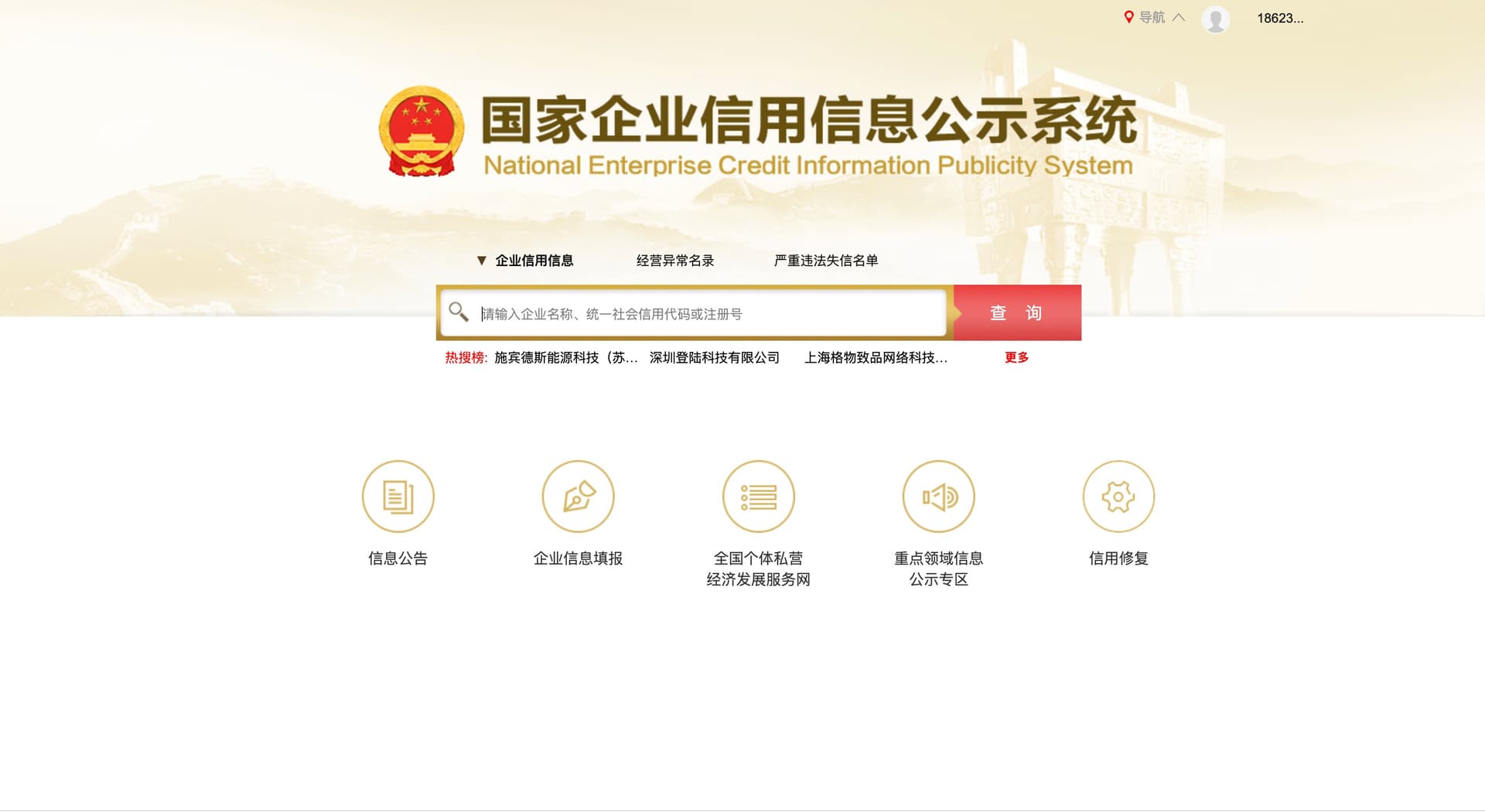
The National Enterprise Credit Information Publicity System (国家企业信用信息公示系统) is China's official and most authoritative platform for enterprise credit information disclosure. Established by the State Administration for Market Regulation (SAMR) and launched in 2014, this system marked a fundamental shift in China's market supervision approach—from traditional administrative controls to credit-based governance.
Platform Authority & Data Sources
Official Status: This is the only government-designated platform for legally mandated enterprise credit disclosure. All registered businesses in China—including companies, individual businesses, and farmer cooperatives—must publish their information here.
Data Sources: The system aggregates data from multiple government departments:
- Market Regulation Administration (business registration, penalties)
- Tax authorities (tax compliance, arrears)
- Environmental Protection departments (pollution violations)
- Emergency Management departments (safety violations)
- Courts (enforcement records, asset freezes)
- Labor and Social Security departments (employment violations)
Social Impact: This platform has become the central tool for:
- Government credit-based supervision
- Banks conducting loan approvals
- Companies selecting business partners
- Consumers verifying merchant credibility
5 Critical Risk Signals in Chinese Company Credit Records
The credit system functions as a comprehensive "credit file" for every Chinese enterprise. Foreign users can search by company name or Unified Social Credit Code to access the following key information—each revealing different types of business risks:
1. Administrative Penalties - Compliance Risk Indicators
What It Shows: Records of fines, confiscation of illegal gains, business suspension orders, license revocations, and other penalties imposed for violations of market regulation, safety, environmental, tax, and labor laws.
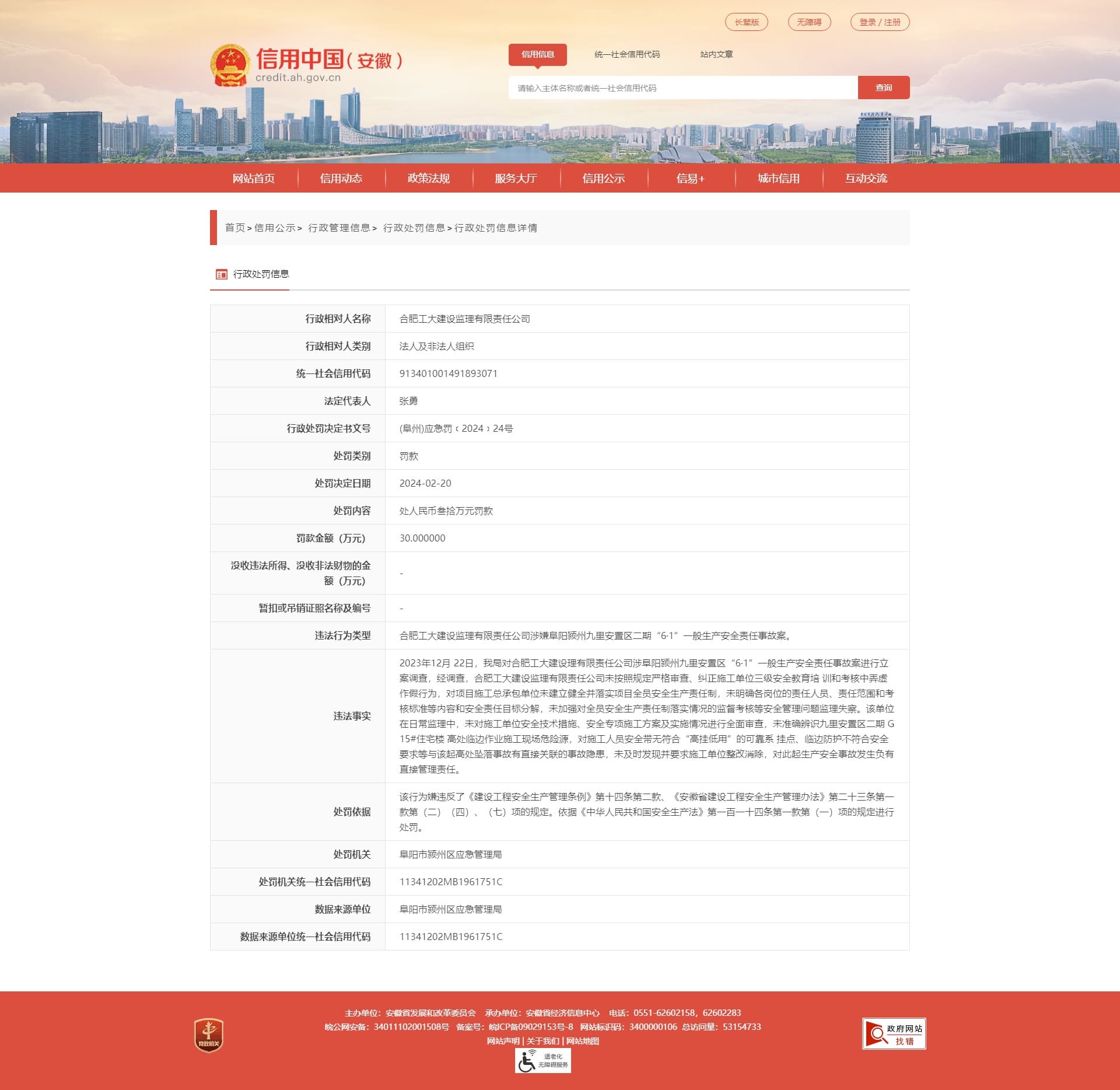
Risk Interpretation:
- Frequent recent penalties: Indicates persistent problems in internal management and compliance operations—approach cooperation cautiously
- Major safety or environmental penalties: As shown in the screenshot above, Hefei Gongda Construction Supervision Co., Ltd. was fined 300,000 RMB for a safety responsibility accident. Such records not only reflect management deficiencies but may also bring production disruptions, legal disputes, and reputational damage
- License revocation: If a company has had key operating permits or qualification certificates revoked, it has lost the legal right to conduct related business—avoid cooperation in that sector entirely
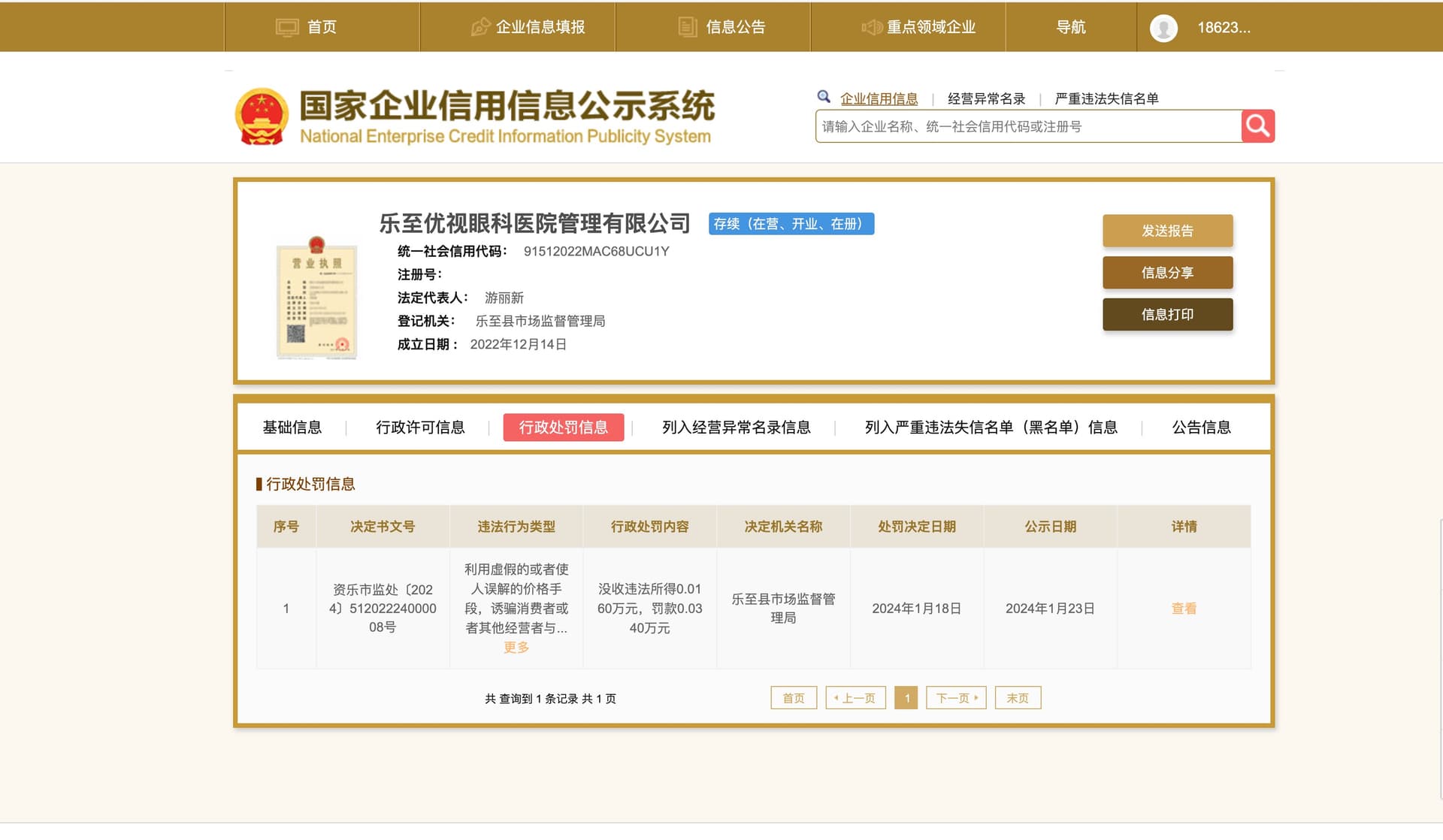
Case Study: Lezhi Youshi Eye Hospital Management Co., Ltd. was penalized for "using false pricing methods to deceive consumers." While the fine amount was relatively small, this reveals fundamental business integrity deficiencies. If you represent their products or services, it could damage your own brand reputation.
2. Business Anomaly Listings - Operational Risk Warning
What It Shows: Companies listed on the Business Anomaly Registry due to:
- "Unable to contact through registered address or business premises"
- "Failed to publicize annual reports within the required period"
- "Concealed true information or committed fraud in publicized information"
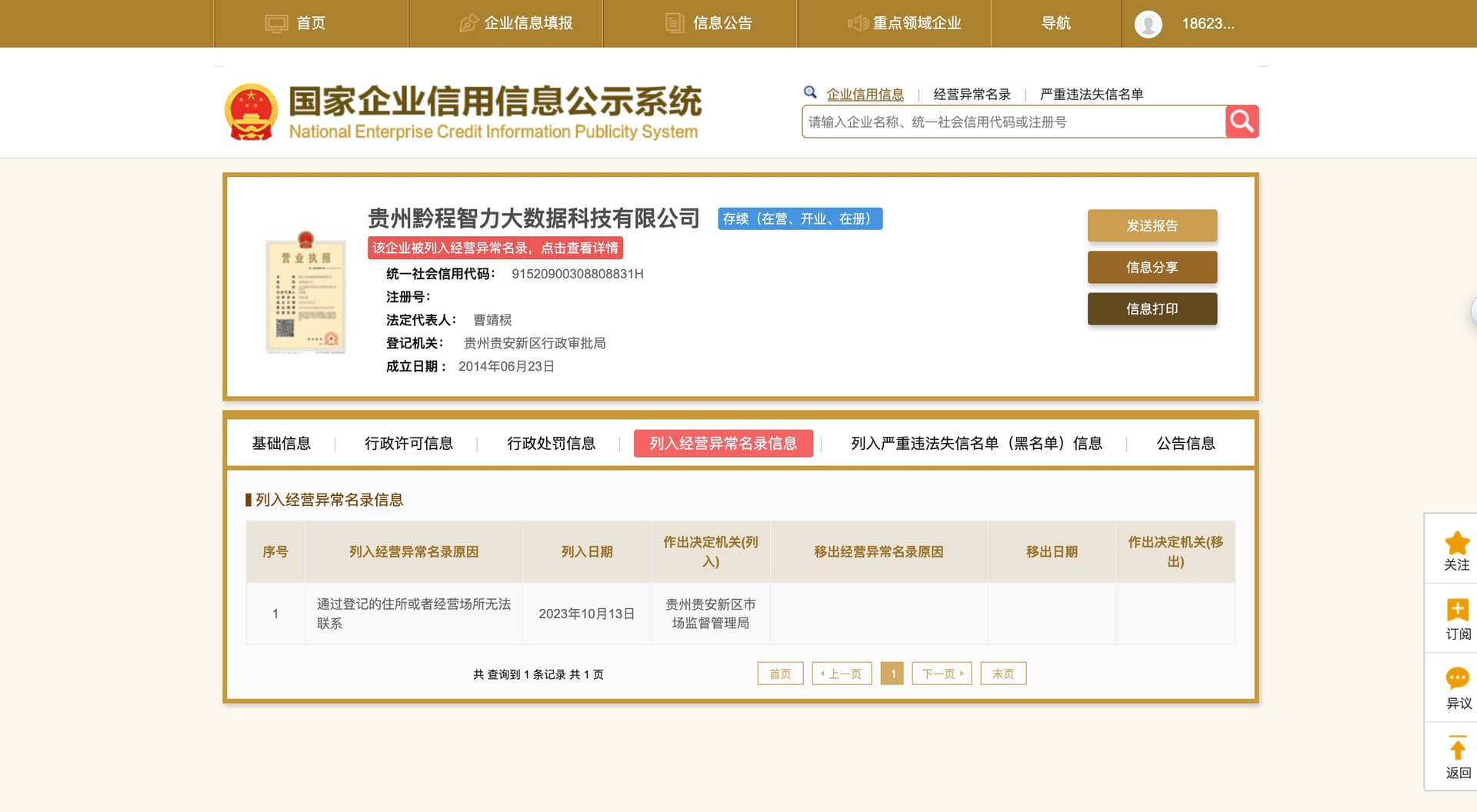
Risk Interpretation: As shown above, Guizhou Qiancheng Zhili Big Data Technology Co., Ltd. was listed as anomalous because it was "unable to contact through registered address or business premises." This indicates the company may have:
- Relocated without proper registration updates
- Ceased operations
- Intentionally evading regulatory oversight
Business dealing risks: Contract performance difficulties, dispute resolution challenges, and potential inability to pursue legal remedies.
3. Serious Violations & Credit Blacklist - High-Risk Entities
What It Shows: Companies placed on the ultimate credit penalty list for serious violations such as:
- False advertising
- Pyramid schemes
- Food safety hazards
- Refusing to execute administrative penalties
Risk Interpretation: Blacklisted companies face comprehensive restrictions in government procurement, project bidding, bank loans, and honorary awards. These are entities with severely compromised credit standing—absolutely avoid cooperation.
ChineseCheck includes blacklist status automatically
Our comprehensive reports check all major Chinese credit blacklists including the Serious Violations List, Dishonest Persons Subject to Enforcement, and regulatory penalty databases—all translated into English.
Verify Chinese Company4. Environmental Violations & Pollution Incidents - ESG Risk Assessment
Extended Data Source: Beyond the main credit system, the Ministry of Ecology and Environment and regional environmental protection departments publish major environmental violations and pollution incidents.
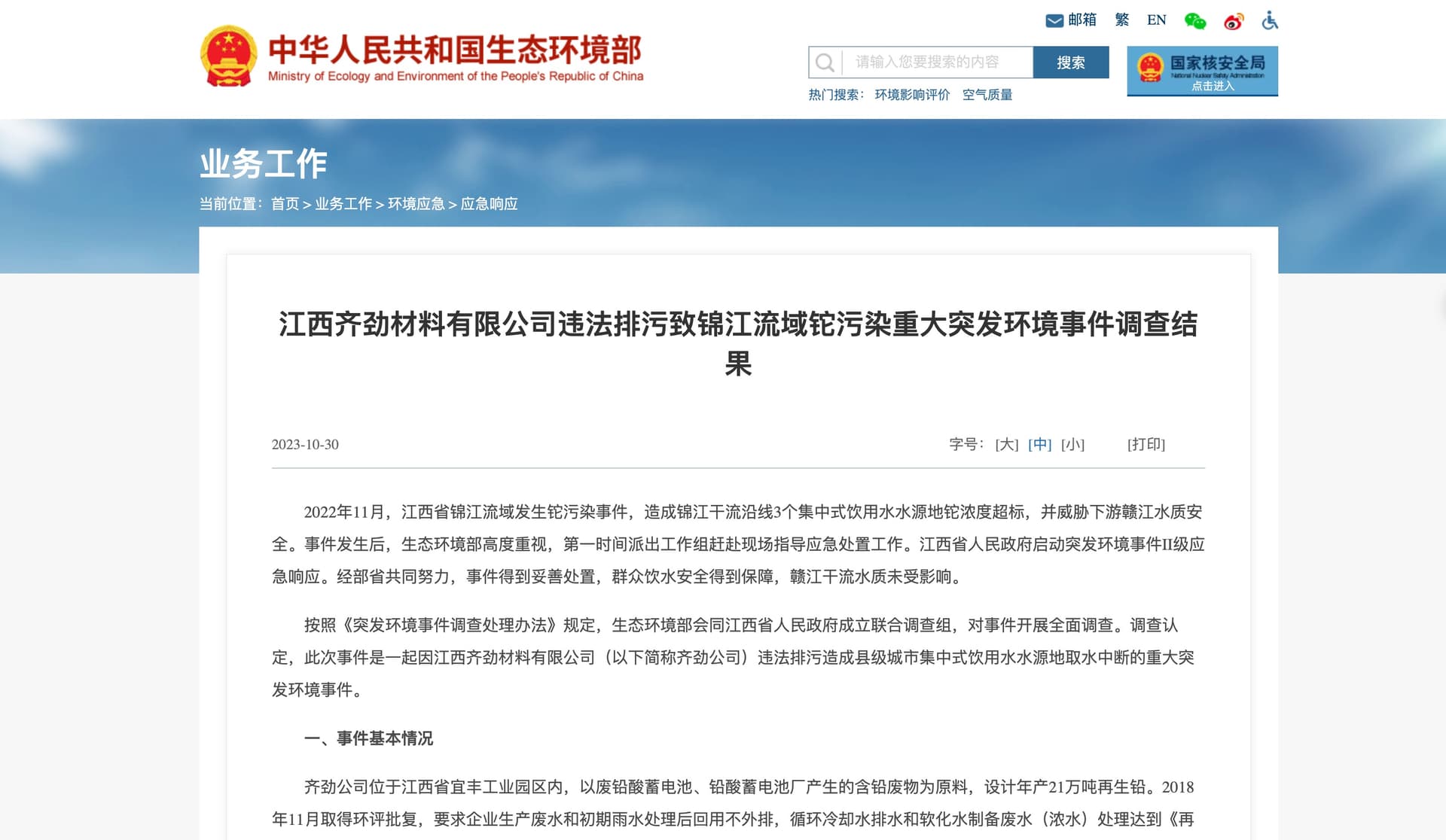
Risk Interpretation: The case above shows Jiangxi Qijin Materials Co., Ltd. causing a major thallium pollution incident affecting drinking water sources in November 2022. Such incidents indicate the company may face:
- Massive compensation liabilities
- Production suspension for rectification
- Supply chain disruption
- Potential criminal liability
For ESG-conscious investors: Environmental violation records are crucial for evaluating a company's environmental management systems and sustainable operation capabilities—particularly relevant for manufacturing, chemical, and energy sector partnerships.
5. Tax Arrears & Judicial Assistance Records - Financial & Legal Risk
What It Shows:
- Tax authority announcements of outstanding taxes
- Court-published records of enforcement subjects, dishonest persons subject to enforcement
- Equity freezes and judicial assistance information
Risk Interpretation: Companies with tax arrears or frequent litigation directly indicate:
- Cash flow constraints
- Weak debt repayment capability
- Multiple legal disputes
Business risks: Payment defaults, asset seizures, and contract non-performance.
How to Check Chinese Company Credit Records (3 Methods Compared)
Method 1: Direct Search on National Enterprise Credit System
Steps:
- Visit https://www.gsxt.gov.cn
- Enter the company's full Chinese name or Unified Social Credit Code
- Complete Chinese ID verification (requires Chinese mainland ID card)
- Browse search results and view penalty records
Challenges:
- ❌ Requires Chinese mainland ID card for full access
- ❌ Interface entirely in Chinese
- ❌ Need to understand Chinese legal and regulatory terminology
- ❌ Cannot access detailed penalty records without verification
Method 2: Credit China Regional Portals
Regional Credit China portals (like Credit China Anhui shown in the screenshots) provide some penalty information, but:
Limitations:
- ⚠️ Fragmented across 30+ provincial portals
- ⚠️ Inconsistent data formats and coverage
- ⚠️ Chinese language only
- ⚠️ Limited search functionality for foreign users
Method 3: ChineseCheck Automated Reports
ChineseCheck aggregates administrative penalty records from 24+ official sources, including the National Enterprise Credit System and all regional Credit China portals, presenting them in easy-to-understand English reports.
- ✅ **No Chinese ID required** - Access from anywhere in the world
- ✅ **Report progress** - Generation time depends on data availability; track progress in My checks.
- ✅ **Plain English** - Regulatory terms translated and explained
- ✅ **Comprehensive coverage** - Penalties + anomalies + blacklists + 20+ data sources
- ✅ **Risk scoring** - AI analysis identifies compliance red flags automatically
The Fastest Way to Verify Chinese Company Compliance Status
Manually navigating China's enterprise credit system is valuable but presents significant barriers for foreign businesses:
❌ Inaccessible - Requires Chinese ID verification ❌ Fragmented - Data scattered across 30+ regional portals ❌ Language barrier - Complex regulatory Chinese terminology ❌ Time-consuming - Must search multiple databases separately
ChineseCheck solves all these problems with automated, comprehensive reports that include:
- Administrative penalties from market regulation authorities
- Business anomaly status from the national registry
- Credit blacklist checks across all major lists
- Environmental violations from ecology departments
- Tax compliance status from tax authorities
- Litigation records from court databases
- AI risk analysis with actionable recommendations
Get a Comprehensive Chinese Company Credit Report
Administrative penalties, business anomalies, credit blacklists, and AI-powered risk analysis—all in one English report available online with PDF download when ready. Generation time depends on data availability; track progress in My checks.
- Ready reports: online viewing and PDF download
- 24+ official government data sources
- Eligible refunds or restored credits under policy; 14-day cash refund window
Practical Decision-Making Guidelines
Case Warnings from Real Records
Case 1 (Qualification Risk): A construction company recently had its "Safety Production Permit" revoked. Signing a subcontracting agreement with them would create risks of illegal project commencement, forced work stoppage, and potential joint safety liability.
Case 2 (Compliance Risk): The eye hospital case shown earlier—penalized for deceptive pricing—reveals fundamental business integrity issues. Representing such a company's products or services could damage your own brand reputation.
Case 3 (Operational Risk): A tech company listed on the Business Anomaly Registry for two consecutive years may appear to still be operating, but could be in internal management chaos or preparing for dissolution. Not suitable as a long-term technology partner.
Decision Recommendations
-
Comprehensive screening, cross-verification: Don't rely on a single source. Cross-check the credit system, China Judgments Online (for litigation), and industry-specific regulatory databases.
-
Dynamic monitoring, trend analysis: Enterprise credit is dynamic. Review records from the past 3-5 years. Is it improving or deteriorating? Any recent major penalties?
-
Deep analysis, understand root causes: For penalty records, read the "violation facts" details to determine whether it was an isolated incident or systematic management failure.
-
Impact assessment, weigh trade-offs: Not all penalties warrant "one-vote veto." Assess severity, rectification status, and whether core business capabilities are affected.
Conclusion: Credit Verification—Essential Protection for Cross-Border Business
In China, a comprehensive "one violation, restrictions everywhere" credit supervision framework has been fully established. The National Enterprise Credit Information Publicity System provides a transparent, authoritative credit inquiry window—but its access barriers make it challenging for foreign businesses to utilize directly.
ChineseCheck bridges this gap, aggregating official credit data from all major government sources and presenting it in accessible English reports. Using comprehensive credit verification as a standard pre-cooperation due diligence procedure is like installing a "firewall" for your business partnerships—effectively filtering out partners with serious violations, compliance issues, or operational risks.
When partnering with Chinese companies, leveraging this public "credit map" is not only a demonstration of risk management wisdom but also a shared commitment to corporate social responsibility and sustainable development. Starting from credit verification is the foundation for building long-term, stable, and mutually trustworthy business partnerships. For deeper analysis on specific risk dimensions, see our guides on litigation records, enforcement history, and tax credit ratings.
Ready to verify a Chinese company's compliance status? Search now →