
How to Check Chinese Company Bidding Records: Government Procurement Blacklists Explained (2026 Guide)
By ChineseCheck Team
There is a risk hiding in plain sight when working with Chinese companies: many businesses that appear perfectly legitimate on the surface are already flagged by Chinese government authorities—blacklisted from public bidding and government procurement. Most foreign buyers never think to check this. And that oversight can be expensive.
China maintains a national bidding credit system (招投标信用体系) that records every company penalized for bid rigging, contract fraud, false certifications, or regulatory violations in public procurement. When a Chinese company gets caught, it goes on a public list—searchable by anyone who knows where to look.
The problem? Knowing where to look requires reading Chinese government websites in Mandarin, navigating multiple fragmented platforms, and searching with an exact Chinese legal company name. For most foreign businesses, that is practically impossible.
This guide explains what China's bidding credit system covers, which official platforms publish violation records, and why this check should be standard practice before any significant engagement with a Chinese partner.
Quick Answer: How to Check Chinese Company Bidding Records
| Method | Access | Cost | Best For |
|---|---|---|---|
| National Public Resources Trading Platform (ggzy.gov.cn) | Free, Chinese interface | Free | Chinese speakers navigating government portals |
| China Government Procurement Network (ccgp.gov.cn) | Free, Chinese interface | Free | Procurement blacklist lookup |
| ChineseCheck | Online when ready; PDF download | $299 | Foreign businesses needing comprehensive English reports |
Access Barrier for Foreign Users
China's bidding and procurement violation records are published across multiple official government platforms—entirely in Chinese, requiring the company's exact Chinese legal name or Unified Social Credit Code to search. No English-language interface exists for any of these portals. ChineseCheck was built to solve exactly this problem.
What Is China's Bidding Credit System—and Why Does It Matter to You?
China's Bidding Law (中华人民共和国招标投标法, amended 2017) mandates that all companies participating in public tenders—covering construction, government procurement, infrastructure, and utilities—meet strict integrity standards. Companies that fail are recorded in public databases and subject to joint punishment coordinated across 38 government agencies.
Under the Government Procurement Law Implementation Regulations (2015) and the Government Procurement Serious Violations and Dishonest Behavior Records Management Measures (财政部令第119号, 2024), a blacklisted supplier faces:
- Disqualification from government procurement for 1–3 years
- Listing on the national blacklist (严重违法失信名单) published by the Ministry of Finance
- Cross-department joint punishment affecting banking access, tax status, and travel
- Public name-and-shame across official government portals and media
Why this matters for foreign buyers: a company on China's bidding blacklist has already been formally judged by Chinese authorities as unreliable, fraudulent, or non-compliant. If the Chinese government won't award it a contract—that is a strong signal for your own due diligence.
Key Government Platforms for Bidding Credit Verification
National Public Resources Trading Platform (全国公共资源交易平台)
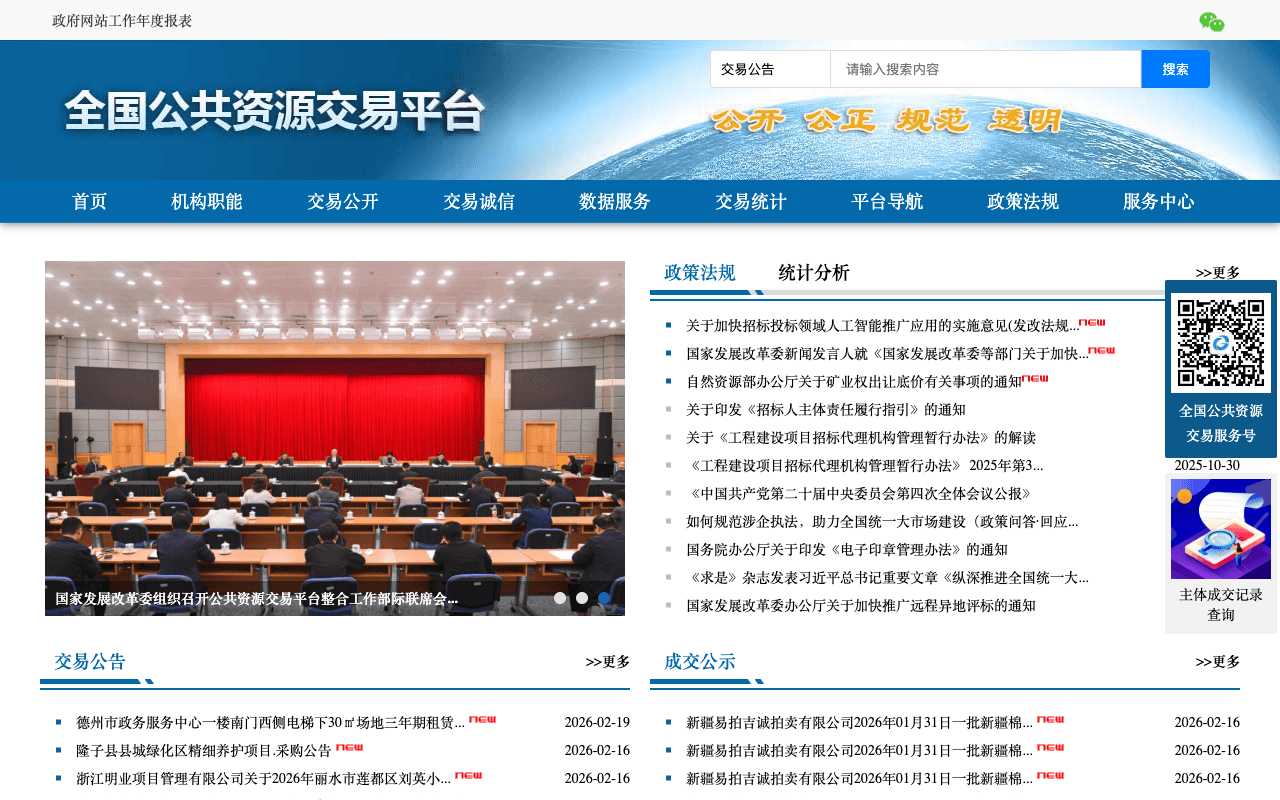
The National Public Resources Trading Platform at ggzy.gov.cn covers the full spectrum of public bidding in China: construction, land auctions, government procurement, state-owned asset transfers, and more.
Its "交易诚信" (Transaction Integrity) section is the critical database for foreign due diligence. It publishes:
- Bid rigging and collusion records from provincial authorities
- False documentation violations where companies submitted fabricated qualifications
- Contractor default records where awarded companies failed to deliver
- Administrative penalty announcements from regional finance bureaus
Any company penalized for bidding violations—at the national or provincial level—will appear here.
China Government Procurement Network (中国政府采购网)
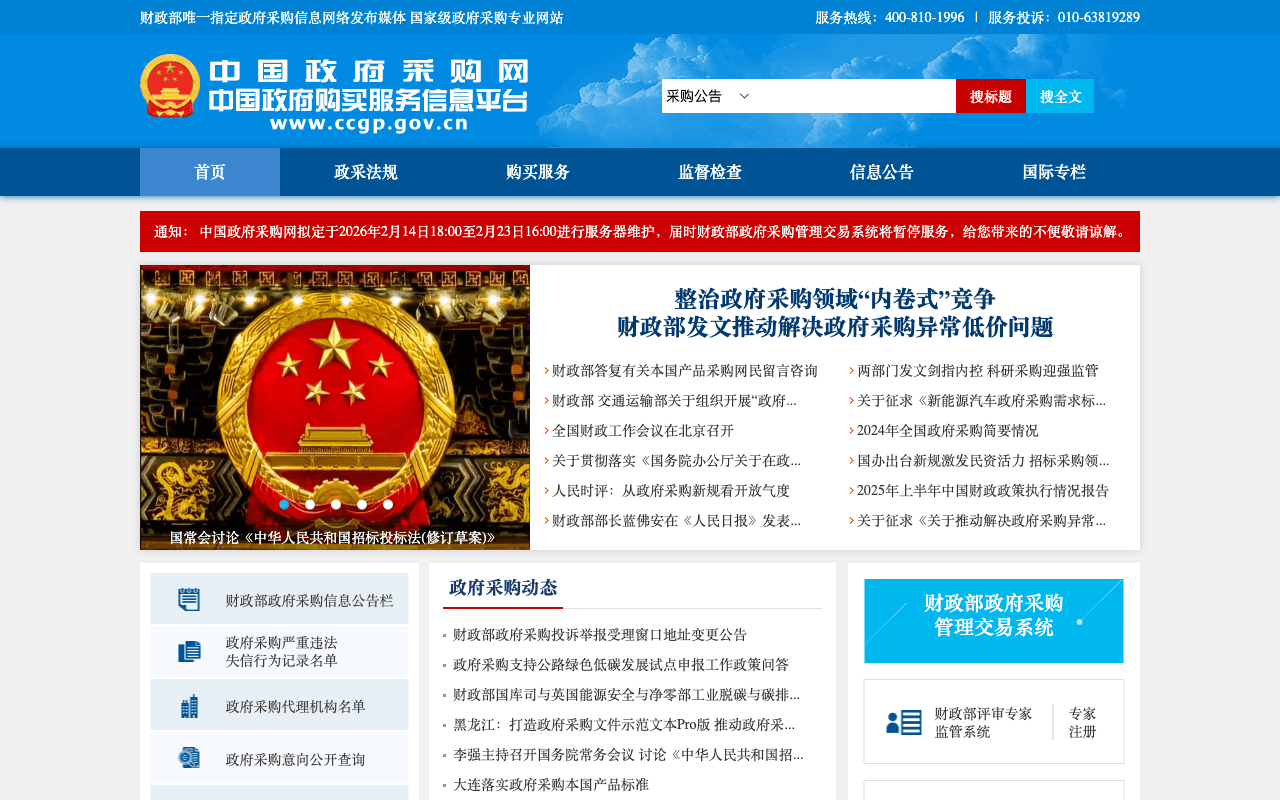
The China Government Procurement Network at ccgp.gov.cn is operated by the Ministry of Finance and publishes the Serious Violations Blacklist (政府采购严重违法失信行为记录名单)—the most authoritative procurement blacklist in China.
Under the Government Procurement Serious Violations Management Measures (财政部令第119号) effective January 2024, suppliers found guilty of:
- Providing false qualifications or certifications
- Bid collusion or rigging
- Bribing procurement officials
- Malicious interference with the procurement process
...are listed here and banned from all government procurement for 1 to 3 years. The Ministry of Finance publishes formal announcement numbers (e.g., the 3,210th announcement) for each listed company—these are permanent public records.
Credit China (信用中国)
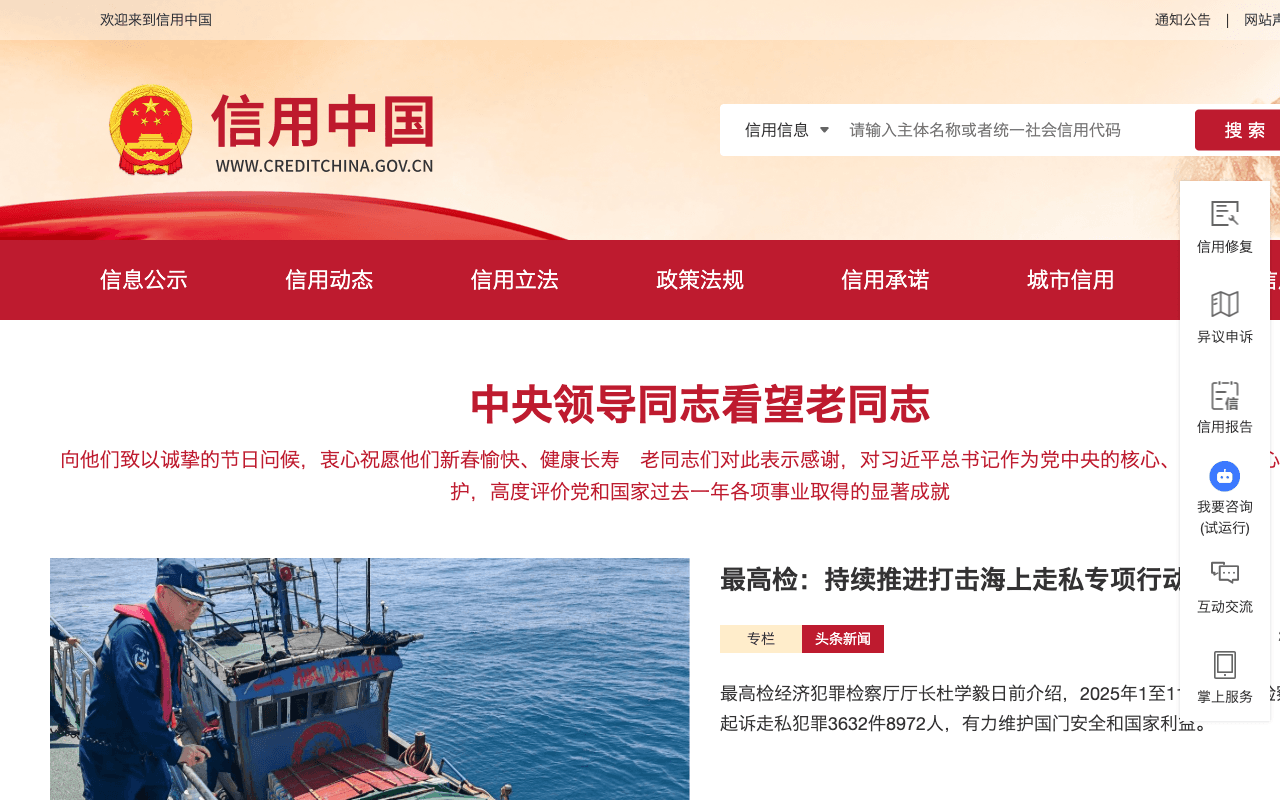
The Credit China platform at creditchina.gov.cn is the national aggregator of credit records across all government agencies. When a company is blacklisted by the Ministry of Finance for procurement fraud, or penalized by NDRC for bidding violations, those records are shared across this platform under China's Social Credit System (社会信用体系).
Searching Credit China by company name reveals aggregated adverse records from all ministries and provincial authorities—making it the most comprehensive single check for bidding and procurement history.
The Bidding Violation Record: What It Looks Like in Practice
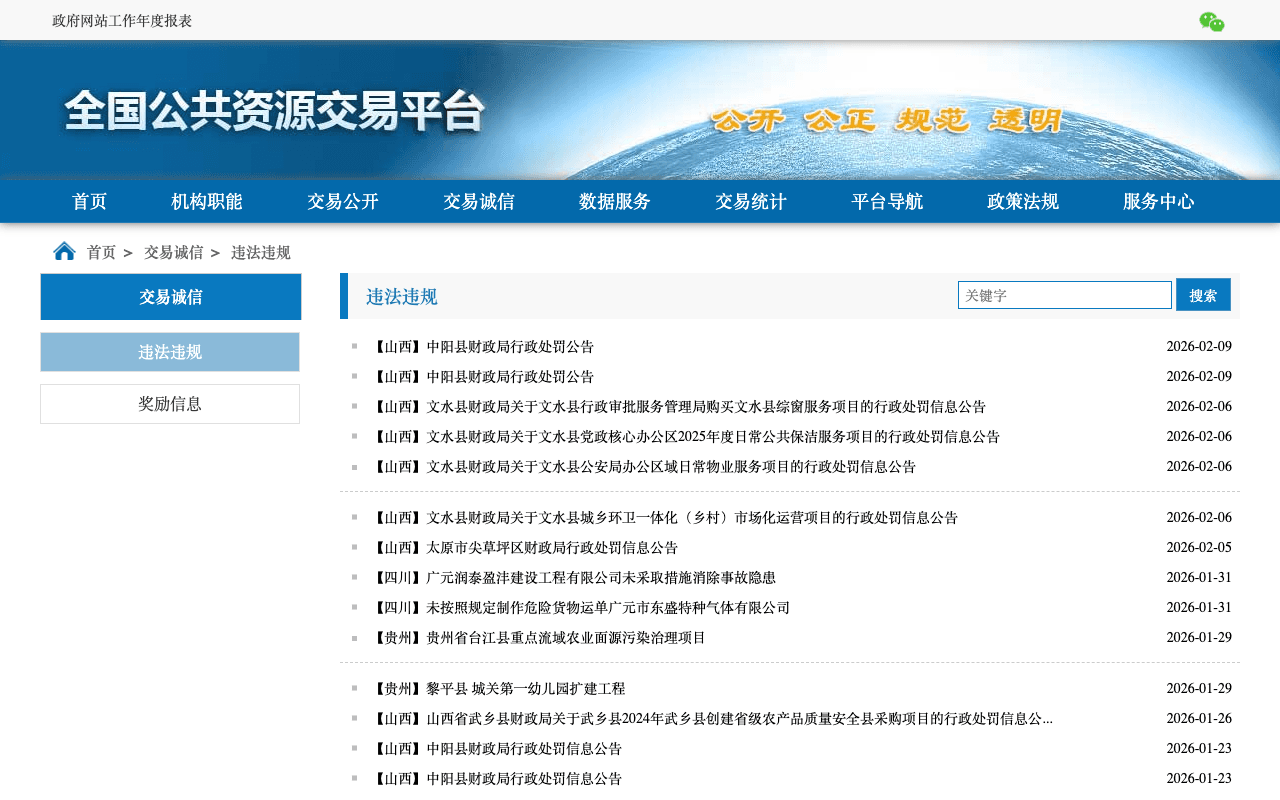
The screenshot above shows actual violation records published by provincial finance bureaus. Notice the typical pattern: a local government authority issues an administrative penalty announcement, naming the specific company and the rule violated. These records are legally binding public disclosures under China's Administrative Penalty Law.
For foreign buyers, interpreting these records requires understanding Chinese legal terminology—what constitutes a "差别歧视条款" (discriminatory tender clause) violation versus a "弄虚作假" (falsification) violation, and what penalty each triggers. ChineseCheck translates these distinctions into plain English risk assessments.
Real Cases: What Happens When Foreign Buyers Skip This Check
Case 1: The Infrastructure JV Partner Already Banned
A European infrastructure company formed a joint venture with a Chinese construction firm to bid on provincial government road projects. After six months of preparation and over $1.5 million in setup costs, the JV lost three consecutive bids without explanation.
Only later did the European company discover the Chinese partner had been listed on the provincial bidding blacklist two years earlier for contract fraud on a municipal project. Under China's bidding rules, a joint venture with a blacklisted entity inherits its disqualification. The violation was publicly searchable on ggzy.gov.cn—but the European company had never checked.
Case 2: The "Reliable Supplier" With a Hidden Procurement Ban
A U.S. medical equipment distributor selected a Chinese agent to serve as the primary bidder for a hospital procurement contract. The agent won the contract, but was simultaneously under investigation by a different provincial authority for bid collusion in another project.
When authorities suspended the agent's business operations, the hospital contract was voided. The American distributor lost the order, the performance bond, and six months of relationship investment. A check of the China Government Procurement Network's violation records would have flagged the agent's earlier penalties in under five minutes.
Case 3: The Factory That "Supplied Government Clients"
A Canadian sourcing company spent 14 months qualifying a Chinese factory as a key supplier, partly based on the factory's claim to supply Chinese government agencies. A standard bidding records check would have revealed the factory had been expelled from the government procurement supplier registry for submitting counterfeit ISO certifications—a public record on ccgp.gov.cn.
The discovery came only after $380,000 worth of custom tooling had been shipped to China. The factory, no longer eligible for government work, subsequently closed.
The Policy Framework Behind China's Bidding Credit System
| Document | Issuer | Key Relevance |
|---|---|---|
| Bidding Law (2017 amendment) | National People's Congress | Root authority establishing penalties for bid fraud and collusion |
| Government Procurement Law Implementation Regulations (2015) | State Council | Defines supplier blacklisting procedures and duration |
| Government Procurement Serious Violations Management Measures (财政部令第119号, 2024) | Ministry of Finance | Current rules governing procurement blacklist: 1–3 year bans |
| Construction Market Credit Management Measures (建市〔2017〕241号) | MOHURD | Credit scoring tied directly to construction bidding eligibility |
| Bidding and Tendering Credit Evaluation Standard (GB/T 31880-2015) | SAMR | National standard for bid credit assessment used by evaluators |
The 2016 Joint Punishment Memorandum for Bidding Violations (signed by 38 government agencies) is particularly significant: it links bidding blacklists to banking restrictions, travel bans, and licensing revocations—the same enforcement restrictions applied to dishonest debtors—meaning a company's bidding violation affects its entire business operation, not just its ability to bid.
Why Foreign Buyers Cannot Easily Access This Information
Language barrier: Every platform operates exclusively in Mandarin Chinese with specialized legal vocabulary. No English-language interface exists.
Data fragmentation: Bidding violation records are distributed across national, provincial, and municipal platforms. A company penalized in Guangdong may not appear in national searches unless the provincial record has been uploaded to the national system.
Search requirements: Platforms require the company's exact Chinese legal name (not romanized or abbreviated) or its 18-digit Unified Social Credit Code—information foreign buyers often don't have.
No aggregated English API: Unlike some financial data systems in other markets, China's government credit platforms do not provide machine-readable English interfaces.
The practical result: foreign businesses routinely form partnerships with Chinese companies that have active bidding violations on public record—simply because the information is invisible without Chinese language capability and platform knowledge.
How to Check Chinese Company Bidding Records (3 Methods)
Method 1: Official Government Platforms (Free, Chinese Only)
- Visit
https://www.ggzy.gov.cn/→ Navigate to "交易诚信" → "违法违规" → search by company name - Visit
https://www.ccgp.gov.cn/→ Find "政府采购严重违法失信行为记录名单" - Visit
https://www.creditchina.gov.cn/→ Enter company name to check aggregated records
Challenges: Requires Chinese language proficiency, exact company name in Chinese, and manual cross-checking across multiple platforms with no guarantee of complete coverage.
Method 2: Chinese Commercial Databases (Tianyancha, Qichacha)
These platforms aggregate some bidding data alongside general company profiles.
Limitations:
- ⚠️ Chinese phone number required for account registration
- ⚠️ May miss provincial-level violation records not yet shared nationally
- ⚠️ No English translation or contextual risk analysis
- ⚠️ Data freshness may lag official government portal updates
Method 3: ChineseCheck Automated Reports
ChineseCheck checks bidding and procurement credit records from official government sources, cross-referenced with enforcement, litigation, tax, and administrative penalty data.
- ✅ **No Chinese required** - Accessible from anywhere globally
- ✅ **Bidding blacklist checked** - National + provincial violation records
- ✅ **Multiple platforms covered** - ggzy.gov.cn, ccgp.gov.cn, creditchina.gov.cn, and more
- ✅ **Plain English reports** - Legal terms translated and explained
- ✅ **AI risk scoring** - Bidding violation patterns identified automatically
Check If Your Chinese Partner Is on a Bidding Blacklist
Bidding violation records, procurement blacklists, enforcement history, and tax ratings—all in one comprehensive English report, available online with PDF download when ready. Generation time depends on data availability; track progress in My checks.
- Ready reports: online viewing and PDF download
- 24+ official government data sources
- Eligible refunds or restored credits under policy; 14-day cash refund window
Conclusion: Bidding Records Are a Fast Filter for Partner Reliability
For foreign businesses working with Chinese companies, bidding and procurement credit records offer a direct view into how a company behaves in formal, high-stakes transactions with Chinese government entities. Unlike civil lawsuits (which can take years to conclude) or enforcement records (which represent post-judgment failures), bidding violations are recorded at the moment of misconduct—making them one of the most timely risk signals available.
Before your next significant engagement with a Chinese partner, confirm:
- Is the company on any government procurement blacklist?
- Does it have bidding violation records at the national or provincial level?
- Has it been penalized by the Ministry of Finance for procurement fraud?
- Has any related entity or key person been flagged in the bidding system?
These checks use publicly available records that can be difficult to navigate without the right tools. ChineseCheck brings available findings together in English; generation time depends on data availability, with progress shown in My checks.
Ready to verify a Chinese company's bidding and procurement status? Search now →