
How to Check a Chinese Company's Intellectual Property Status Before Signing Any Deal (2026 Guide)
By ChineseCheck Team
When foreign executives research Chinese business partners, they typically review financial statements, factory certifications, and trade references. Yet one of the most consequential risk factors is almost universally overlooked: the company's intellectual property position.
IP disputes in China operate by a different set of rules than most foreign businesses expect—rules shaped by decades of evolving legislation and a uniquely complex registry system that is practically inaccessible to anyone who doesn't read Mandarin. The consequences of overlooking this step have cost foreign companies hundreds of millions of dollars.
Quick Answer: How to Check a Chinese Company's IP Status
| Method | Access | Cost | Best For |
|---|---|---|---|
| CNIPA official portals | Free, entirely in Chinese | Free | Mandarin-speaking professionals |
| Commercial databases (Tianyancha, etc.) | Chinese phone required | $50–200 | One-time checks with limited data |
| ChineseCheck | Online when ready; PDF download | $299 | Foreign businesses needing English reports |
Access Barrier for Foreign Users
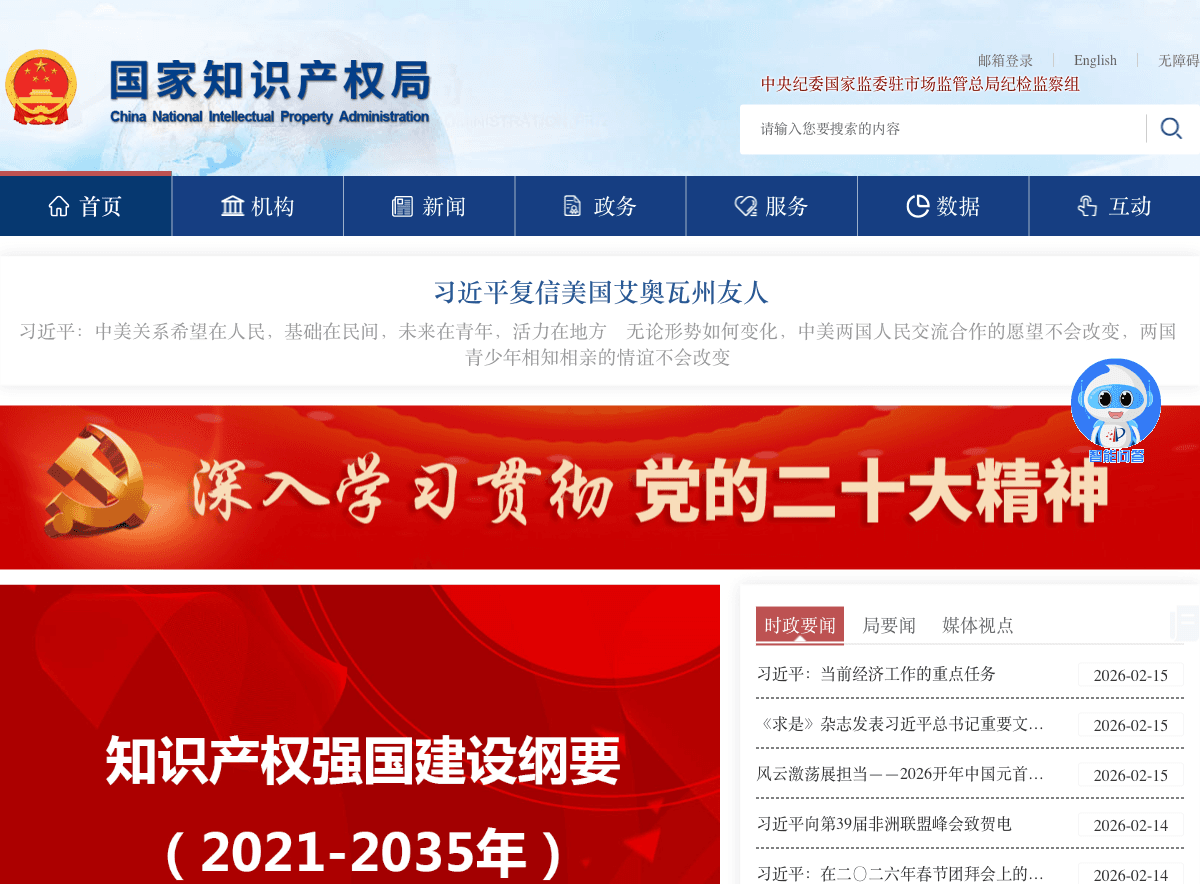
China's intellectual property records are managed across multiple government portals operated by the China National Intellectual Property Administration (CNIPA)—entirely in Chinese with no English interface. You must search using the company's exact Chinese legal name or its Unified Social Credit Code. Most foreign businesses cannot independently navigate these systems—which is exactly the problem ChineseCheck was built to solve.
China's IP Legal Framework: What Foreign Businesses Must Understand
China has built one of the world's most comprehensive intellectual property legal systems, anchored by three core laws and a national 15-year strategy.

The Three Core IP Laws:
- Patent Law of the PRC (4th amendment, effective June 2021) — governs invention patents (20-year term), utility model patents (10 years), and design patents (15 years). China is now the world's largest patent applicant by filing volume.
- Trademark Law of the PRC (2019 amendment) — China operates a "first-to-file" system: whoever registers a trademark first owns it in China, regardless of who created or used it first elsewhere in the world.
- Copyright Law of the PRC (3rd amendment, effective June 2021) — automatic protection upon creation, but registration significantly strengthens enforcement options.
The National Strategy: In September 2021, the CPC Central Committee and State Council jointly issued the "Outline for Building an IP Power Nation (2021–2035)"—a binding national blueprint setting ambitious targets: by 2025, China aims for 12 high-value invention patents per 10,000 population; by 2035, to have world-class IP creation, protection, and utilization capabilities.
The practical implication for foreign businesses: Chinese companies are building larger, more sophisticated IP portfolios faster than ever. Understanding a partner's IP standing is no longer optional due diligence—it is a fundamental business necessity.
Real Cases: How Ignoring IP Cost Foreign Companies Dearly
Case 1: Apple Paid $60 Million for a Trademark It Didn't Check — The iPad Dispute
In 2012, Apple was forced to pay $60 million USD to Proview Technology (Shenzhen) to settle the "iPad" trademark dispute in China. Proview had registered "IPAD" as a Chinese trademark years before Apple's tablet became a global product.
When Apple launched iPad in China, the company assumed its global trademark rights would apply domestically. They did not. Under China's first-to-file trademark system, Proview held the legal right. Chinese courts sided with Proview, iPad sales faced the threat of a nationwide ban, and Apple had no choice but to pay the $60 million settlement.
Lesson: China's first-to-file trademark system means a Chinese company can legally own your brand name on Chinese soil. Before entering any partnership, manufacturing arrangement, or distribution deal, verify what trademarks the Chinese company holds—and what they don't hold that you might urgently need.
Case 2: The "Jordan" Name — 8 Years of Litigation Over a Chinese Transliteration
In 2012, Michael Jordan filed suit against Qiaodan Sports (乔丹体育), a Chinese sportswear company that had built a billion-dollar business using the Chinese transliteration of his name (乔丹) along with a silhouette nearly identical to his iconic Nike logo.
The case wound through Chinese courts for nearly 8 years — these types of disputes are tracked in China's court records system. While Jordan won a landmark ruling in 2020 from China's Supreme People's Court on the specific use of his Chinese name, Qiaodan retained dozens of other registered trademarks and had already dominated the mid-tier sportswear market for years.
Lesson: When entering brand-sensitive partnerships, check not only English-language trademarks but also Chinese-character marks and transliterations of international brand names. A Chinese partner using registered marks that infringe on your brand creates liability that falls back on you.
Case 3: The OEM Patent Trap — Manufacturing a Product You Can't Export
A European electronics brand contracted a Chinese manufacturer to produce components under a private-label arrangement. What the European company failed to check: the manufacturer had filed utility model patents covering key aspects of the component design—in their own name.
When the European brand attempted to source the same design from an alternative factory, the original Chinese manufacturer filed for a patent injunction, blocking both the alternative manufacturing and the export of finished goods. The European company faced costly redesigns, missed delivery deadlines, and significant supply chain disruption.
Lesson: In OEM and ODM manufacturing relationships, verify what patents your Chinese supplier holds and ensure contractual clarity about IP ownership for products developed in collaboration. A supplier with patents in your product category holds significant leverage.
What to Check: Key IP Signals in Chinese Company Due Diligence
When evaluating a Chinese company's IP position, foreign businesses should examine four key dimensions:
1. Patent Portfolio
- Number and type of active patents (invention, utility model, design)
- Patent status: active, expired, pending, challenged, or invalidated
- Technical scope: are the patents in your product category?
- Any compulsory licensing or ownership dispute history
2. Trademark Registration
- Chinese-character trademarks across relevant Nice Classification classes
- International trademark filings (Madrid Protocol)
- Watch for: trademarks that incorporate your brand name, product names, or key identifiers
- Status: active, challenged, expired, or pending registration
3. IP Disputes and Litigation
- Has the company been involved in patent infringement cases?
- Are they the plaintiff (enforcing IP) or defendant (accused of infringement)?
- Are there pending trademark cancellation or invalidation proceedings against them?
4. IP as a Quality Signal
- Tech-based SME certification (requires active IP portfolio as a key criterion)
- "Little Giant" designation (IP strength is a mandatory evaluation dimension)
- A company claiming technical leadership with no IP portfolio is a warning flag
How to Check Chinese Company IP Status (3 Methods)
Method 1: CNIPA Official Portals (Free, Chinese Only)
The China National Intellectual Property Administration operates the authoritative IP databases:
- Patent search:
pss-system.cponline.cnipa.gov.cn— comprehensive patent database with full-text search - Trademark search:
sbj.cnipa.gov.cn/sbj/sbcx/— China Trademark Office query system
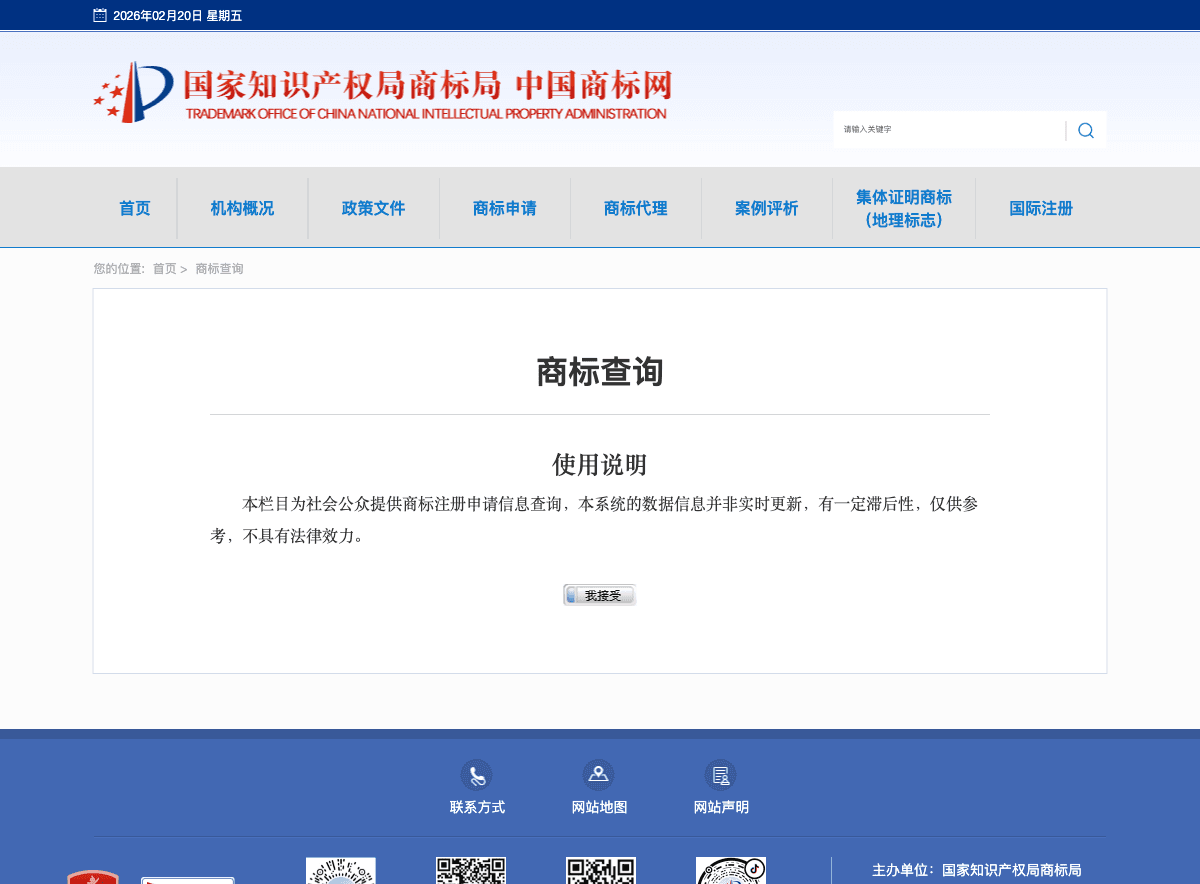
Challenges for foreign users:
- ❌ Entirely in Chinese — no English interface, no translation tools built in
- ❌ Separate databases for patents, trademarks, and geographic indications
- ❌ Must search by exact Chinese legal name or registration number
- ❌ Technical patent claims require subject-matter expertise to interpret
- ❌ No aggregated company-level IP risk summary exists
Method 2: Commercial Chinese Business Databases
Platforms like Tianyancha and Qichacha aggregate some IP data alongside general company profiles.
Limitations:
- ⚠️ Chinese language only — requires strong Mandarin reading ability
- ⚠️ Chinese phone number required for full account registration
- ⚠️ IP data may be incomplete or lag behind official CNIPA updates
- ⚠️ No risk analysis, interpretation, or English translation provided
Method 3: ChineseCheck Automated Reports
ChineseCheck queries official CNIPA sources and presents intellectual property data alongside 24+ other company data dimensions in comprehensive English-language reports.
- ✅ **No Chinese ID required** — Access reports from anywhere in the world
- ✅ **Patent & trademark data** — Sourced directly from official CNIPA databases
- ✅ **Plain English** — All Chinese legal terminology translated and explained
- ✅ **Full company profile** — IP data combined with litigation records, tax credit, penalties, and enforcement history
- ✅ **AI risk scoring** — Identifies IP patterns, disputes, and red flags automatically
ChineseCheck reports include IP status, patent and trademark data
Our comprehensive reports show Chinese company patent portfolios, trademark registrations, IP litigation history, and government certifications—all in one English report.
Verify Chinese CompanyConclusion: IP Due Diligence Is Non-Negotiable in China
The three cases above—Apple's $60M iPad settlement, Michael Jordan's 8-year trademark battle, and the OEM patent trap—share a common thread: the foreign party assumed standard due diligence was sufficient, and that IP issues would be resolvable after the fact. In each case, that assumption proved catastrophic.
China's IP landscape is uniquely challenging for foreign businesses in three ways:
- First-to-file trademark system — whoever registers first wins, regardless of international prior use
- World's largest patent application volume — technology areas are increasingly covered by Chinese company patents
- Rapidly improving enforcement — Chinese courts are now sophisticated IP adjudicators with strong enforcement tools
Before signing supply contracts, entering joint ventures, or inking licensing agreements, verify:
- What trademarks does the Chinese company hold? — Especially in product categories relevant to your business
- Does the company have active patents? — And are any in your technology area?
- Has the company been involved in IP disputes? — As plaintiff or defendant
- Does the company's IP profile match its claimed capabilities? — A verified "Little Giant" should have a substantive IP portfolio
These questions can prevent the most expensive mistakes in China business partnerships. Combine IP verification with enforcement records, tax credit ratings, and administrative penalties for complete due diligence.
Get a Comprehensive Chinese Company Verification Report
IP status, patent and trademark data, litigation history, tax compliance, and AI-powered risk analysis—all in one English report available online with PDF download when ready. Generation time depends on data availability; track progress in My checks.
- Ready reports: online viewing and PDF download
- 24+ official government data sources including CNIPA
- Eligible refunds or restored credits under policy; 14-day cash refund window
Ready to verify a Chinese company's IP status and full risk profile? Search now →