
How to Check Chinese Company Annual Reports: Why Missing Filings Are a Major Red Flag (2026 Guide)
By ChineseCheck Team
Before wiring money to a Chinese supplier, most foreign buyers check the basics: business license, factory photos, maybe a few references. But there's one data point that many overlook—and it's one of the strongest early-warning signals in Chinese corporate due diligence: whether the company has filed its annual reports on time.
In China, every registered company is legally required to submit an annual report to the government between January 1 and June 30 each year, covering the previous year's operations. This isn't optional paperwork—it's a legal obligation under the Enterprise Information Publicity Regulations (State Council Decree No. 654). Companies that fail to file are placed on the Business Anomaly Registry (经营异常名录), a public blacklist that signals serious reliability concerns.
This guide explains what Chinese company annual reports contain, why missing filings should alarm foreign buyers, and how to verify annual report status before signing contracts.
Quick Answer: How to Check Annual Report Filing Status
| Method | Access | Cost | Best For |
|---|---|---|---|
| National Enterprise Credit Information Publicity System (gsxt.gov.cn) | Free, Chinese interface | Free | Chinese speakers with local access |
| Commercial databases (Tianyancha, etc.) | Chinese phone required | $50-200 | One-time spot checks |
| ChineseCheck | Online when ready; PDF download | $299 | Foreign businesses needing comprehensive English reports |
Access Barrier for Foreign Users
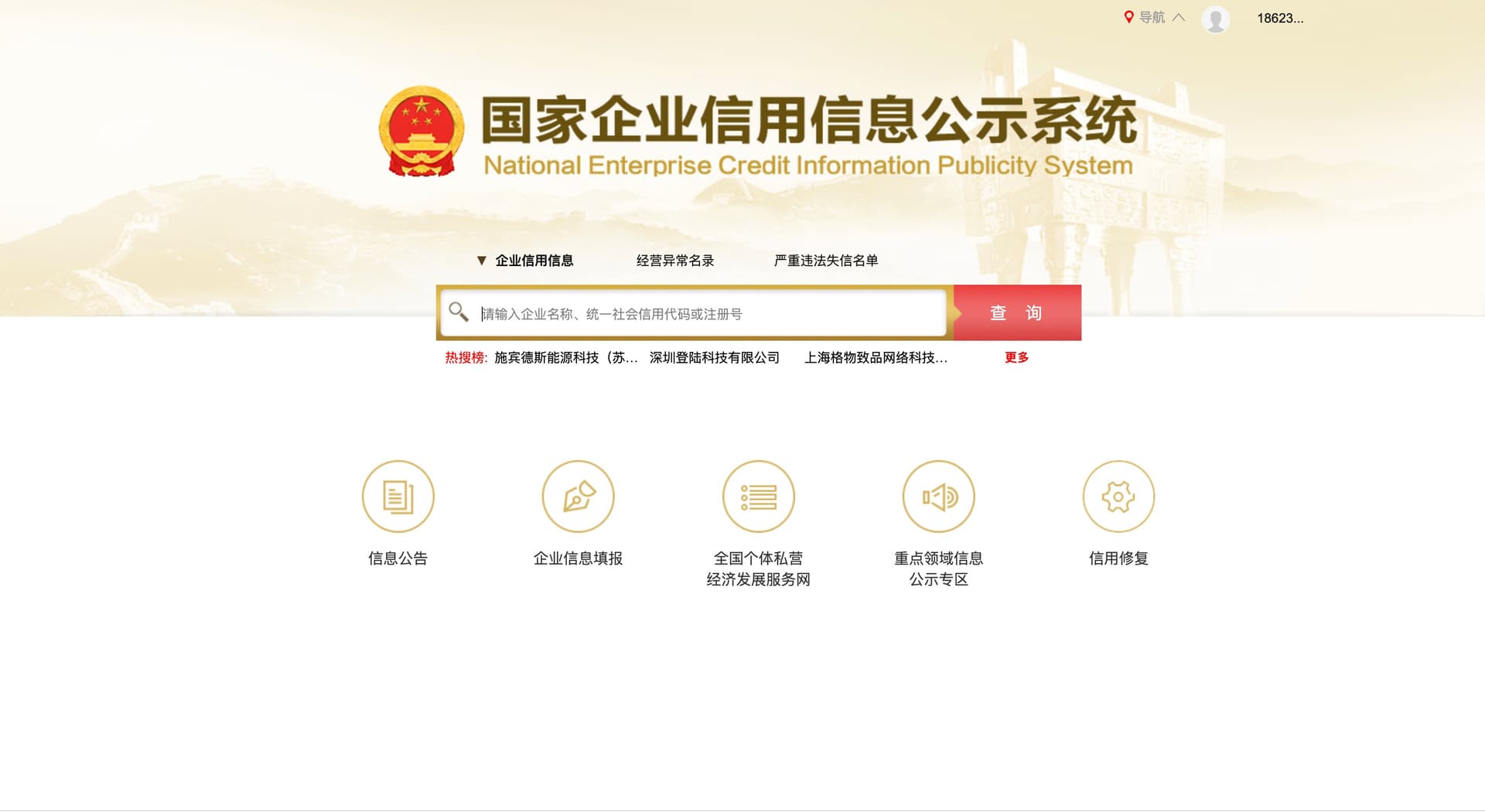
China's annual report data is published on the National Enterprise Credit Information Publicity System—entirely in Chinese with no English interface. The system requires searching by exact Chinese company name or Unified Social Credit Code. Foreign businesses cannot easily navigate this platform—which is exactly why ChineseCheck was built.
What Do Chinese Company Annual Reports Contain?
Under China's Enterprise Information Publicity Regulations, every company must disclose 7 categories of information in its annual report:
- Company address and contact information — Is the company reachable at its registered address?
- Business operation status — Is the company actively operating, suspended, or in liquidation?
- Shareholder equity and capital contributions — Have shareholders fulfilled their capital commitments?
- Equity changes — Have there been ownership transfers that might signal instability?
- Website and e-commerce presence — Does the company have an online presence?
- Employee count — How large is the workforce? Sudden drops may indicate trouble.
- Financial summary (optional disclosure) — Total assets, liabilities, revenue, and profit figures.
The first 6 items are mandatory public disclosure. The financial summary is at the company's discretion—but companies that choose not to disclose financials may have something to hide.
For foreign buyers, the most valuable signal isn't the data itself—it's whether the company bothered to file at all. A company that consistently files annual reports on time demonstrates basic corporate governance discipline. A company that misses filings is either negligent, in distress, or deliberately avoiding scrutiny.
What Happens When a Chinese Company Fails to File?
The consequences of not filing annual reports are severe and escalating:
Stage 1: Business Anomaly Registry (经营异常名录)
If a company fails to file its annual report by June 30, market supervision authorities will place it on the Business Anomaly Registry. This is a public record visible to anyone searching the company on the National Enterprise Credit Information Publicity System.
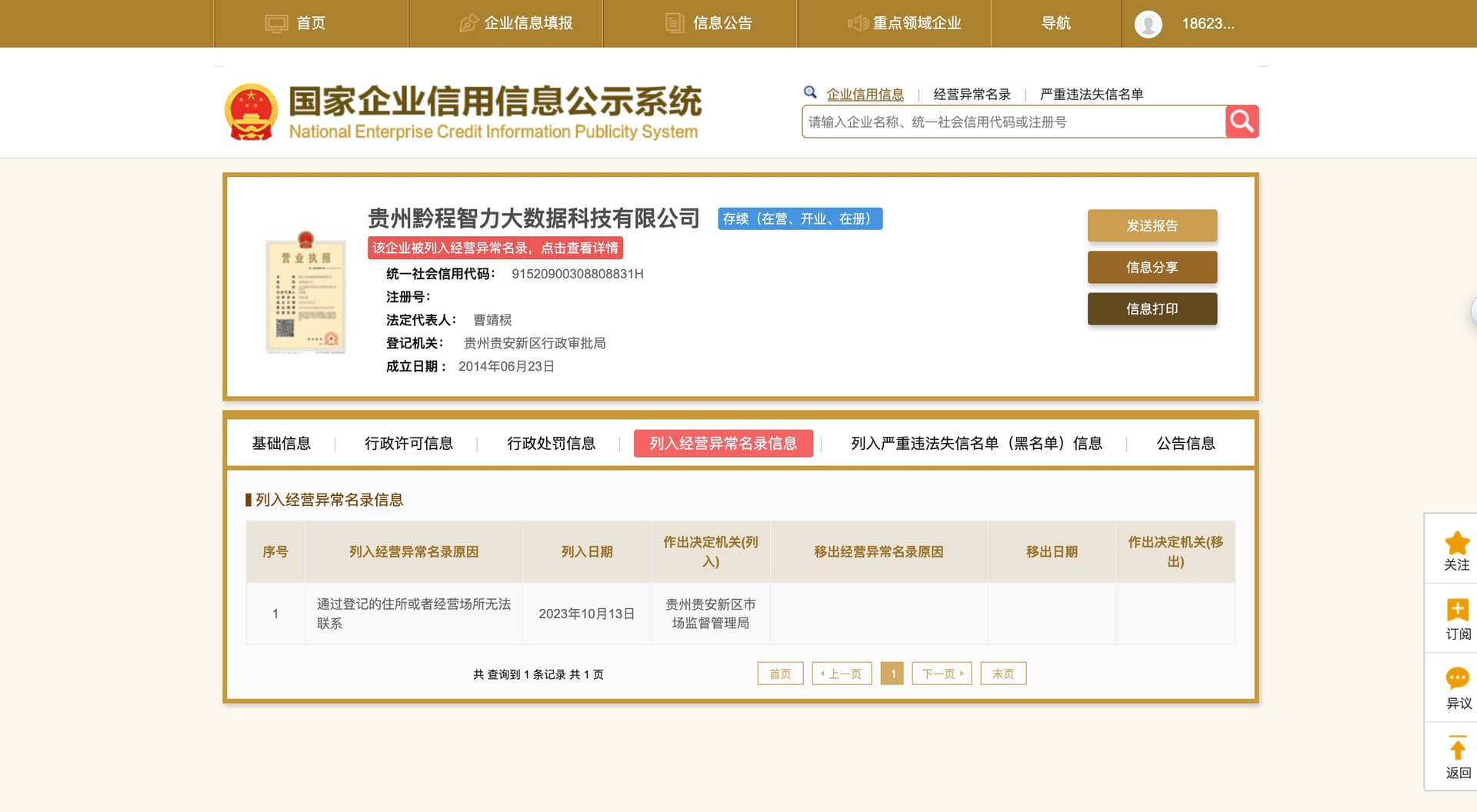
Under the Administrative Measures for Business Anomaly Registry, companies can be listed for:
- Failing to submit annual reports on time
- Submitting false or misleading annual report information
- Being unreachable at their registered business address
- Concealing material facts in public filings
Stage 2: Serious Violations List (严重违法失信名单)
If a company remains on the Business Anomaly Registry for 2 consecutive years without correction, or submits grossly false annual reports, it can be escalated to the Serious Violations and Dishonesty List. Under the Measures for Managing Serious Violations and Dishonesty Lists, this triggers:
- 3-year credit punishment period with cross-department restrictions
- Legal representatives are barred from serving as directors or officers of other companies for 3 years
- Restricted from government procurement and bidding, and policy benefits
- Information shared across all government credit platforms
Stage 3: License Revocation
Under the Regulations on Market Entity Registration Administration, persistent failure to file annual reports can ultimately lead to business license revocation—effectively forcing the company to cease operations.
ChineseCheck reports include annual report filing history
Our comprehensive reports show whether a company has filed all annual reports, any Business Anomaly Registry listings, and cross-reference this with 24+ other official data sources for a complete risk picture.
Verify Chinese CompanyReal-World Impact: How Missing Annual Reports Cost Foreign Buyers
Case 1: $400K Prepayment to a "Ghost Company"
A European furniture importer paid a $400,000 deposit to a Guangdong-based manufacturer offering competitive prices on custom furniture. Six months later, production hadn't started. Investigation revealed:
- The company had not filed annual reports for 3 consecutive years
- It was listed on the Business Anomaly Registry since 2023
- The registered address was an empty office—the company was flagged as "unreachable"
- The legal representative had already started a new company under a different name
The annual report gap was the earliest visible red flag—available years before the fraud became apparent.
Case 2: Japanese Trading Firm Discovers Hidden Financial Distress
A Japanese electronics distributor was evaluating a Shenzhen-based component supplier. The supplier's factory looked modern, and samples were acceptable. However, a comprehensive credit check revealed:
- Annual reports were filed, but the company had opted not to disclose financial data for the last 2 years
- The most recent disclosed financials showed liabilities exceeding assets by 40%
- The company had been placed on the Business Anomaly Registry for providing a false registered address
Result: The Japanese firm chose an alternative supplier whose annual reports showed consistent filing, transparent financials, and no anomaly listings. The original supplier filed for bankruptcy 8 months later.
Case 3: US Importer's Supplier Loses Export Eligibility
A US consumer goods company had a 3-year relationship with a Chinese supplier. Performance was acceptable until the supplier was placed on the Serious Violations List for consecutive annual report failures. The consequences cascaded:
- The supplier lost access to government export subsidies
- Banks downgraded its credit rating, restricting trade finance
- The supplier couldn't secure letters of credit, causing shipment delays
The annual report failures didn't just signal risk—they directly caused operational disruption that affected the buyer's supply chain.
How to Check Chinese Company Annual Reports (3 Methods)
Method 1: National Enterprise Credit Information Publicity System (Official, Free)
The official platform at gsxt.gov.cn is where all annual reports are filed and publicly disclosed.
Steps:
- Visit
https://www.gsxt.gov.cn/ - Enter the company's full Chinese legal name or Unified Social Credit Code
- View the company profile, click on "年度报告" (Annual Reports) tab
- Check for filing gaps (missing years indicate non-compliance)
- Review any "经营异常名录" (Business Anomaly Registry) listings
Challenges:
- ❌ Entirely in Chinese with complex government terminology
- ❌ Requires exact Chinese company name (no English search)
- ❌ Financial data may not be disclosed (company's choice)
- ❌ Must manually cross-reference with other credit databases
Method 2: Commercial Chinese Business Databases
Tianyancha and Qichacha aggregate annual report data alongside other company information.
Limitations:
- ⚠️ Chinese language only, requires Chinese phone number
- ⚠️ May not show complete historical filing records
- ⚠️ No English translation or risk interpretation
- ⚠️ Cannot verify data accuracy against official source
Method 3: ChineseCheck Automated Reports
ChineseCheck checks annual report filing history from official sources and presents it alongside 24+ other data dimensions in comprehensive English reports.
- ✅ **No Chinese ID required** - Access from anywhere in the world
- ✅ **Filing history checked** - Shows all years filed and any gaps
- ✅ **Anomaly status included** - Business Anomaly Registry and Serious Violations List
- ✅ **Cross-referenced** - Annual report data combined with litigation, tax credit, enforcement records
- ✅ **AI risk scoring** - Identifies filing patterns and red flags automatically
The Fastest Way to Verify Chinese Company Annual Reports
Manually checking annual report status presents significant barriers for foreign businesses:
❌ Language barrier — Government portal entirely in Chinese ❌ No English search — Must use exact Chinese company name ❌ Partial data — Financial details may be voluntarily hidden ❌ No context — Raw filing status without risk interpretation
ChineseCheck solves all these problems with automated, comprehensive reports that include:
- Annual report filing history — all years checked with gap identification
- Business Anomaly Registry status — current and historical listings
- Financial data — when disclosed in annual reports
- Shareholder and capital information — from annual report disclosures
- Cross-referenced risk signals — annual reports combined with litigation, tax credit, enforcement, and penalties
- AI risk analysis — automatic identification of filing irregularities
Get a Comprehensive Chinese Company Verification Report
Annual report history, filing compliance, Business Anomaly Registry status, and AI-powered risk analysis—all in one English report available online with PDF download when ready. Generation time depends on data availability; track progress in My checks.
- Ready reports: online viewing and PDF download
- 24+ official government data sources
- Eligible refunds or restored credits under policy; 14-day cash refund window
Conclusion: Annual Reports Are Your First Line of Defense
In Chinese corporate due diligence, annual report filing status is one of the simplest yet most reliable indicators of a company's legitimacy and operational health. The logic is straightforward:
- A company that files consistently demonstrates basic corporate governance discipline and has nothing to hide from regulators.
- A company that misses filings is either negligent about compliance, experiencing financial distress, or deliberately avoiding government scrutiny—all of which should concern foreign business partners.
Before signing contracts or wiring payments, take 5 minutes to verify:
- Has the company filed annual reports for all years since registration? — Gaps indicate non-compliance.
- Is it on the Business Anomaly Registry? — A public blacklist for non-filers and false filers.
- Has it disclosed financial data? — Voluntary non-disclosure may signal hidden problems.
- Are there related red flags? — Cross-check with litigation records, enforcement history, and tax credit data.
Annual report compliance may seem like boring bureaucratic paperwork—but in cross-border business, it's often the difference between a reliable partner and an expensive lesson.
Ready to verify a Chinese company's annual report status? Search now →