
How to Check Chinese Company Enforcement Records: Executee, Dishonest Debtor & Consumption Restrictions (2026 Guide)
By ChineseCheck Team
When you work with a Chinese supplier, distributor, or JV partner, the most expensive risk is often not "they were sued"—it's "a court judgment already took effect and they still didn't pay." In Chinese public records, that risk shows up under three escalating labels: executee (被执行人), dishonest judgment debtor (失信被执行人), and high-consumption restriction (限制高消费).
In our earlier litigation records guide, we explained how to check if a Chinese company has been sued. This guide goes one step further: how to check whether a company has failed to comply with court judgments—a far more serious red flag that directly threatens your money, supply chain, and partnership stability.
Quick Answer: How to Check Chinese Company Enforcement Records
Here are 3 ways to verify enforcement risk before signing a contract:
| Method | Access | Cost | Best For |
|---|---|---|---|
| China Execution Information Disclosure | Free, no registration | Free | Chinese speakers navigating government portals |
| Commercial databases (Tianyancha, etc.) | Chinese phone required | $50-200 | One-time spot checks with partial data |
| ChineseCheck | Online when ready; PDF download | $299 | Foreign businesses needing comprehensive English reports |
Access Barrier for Foreign Users
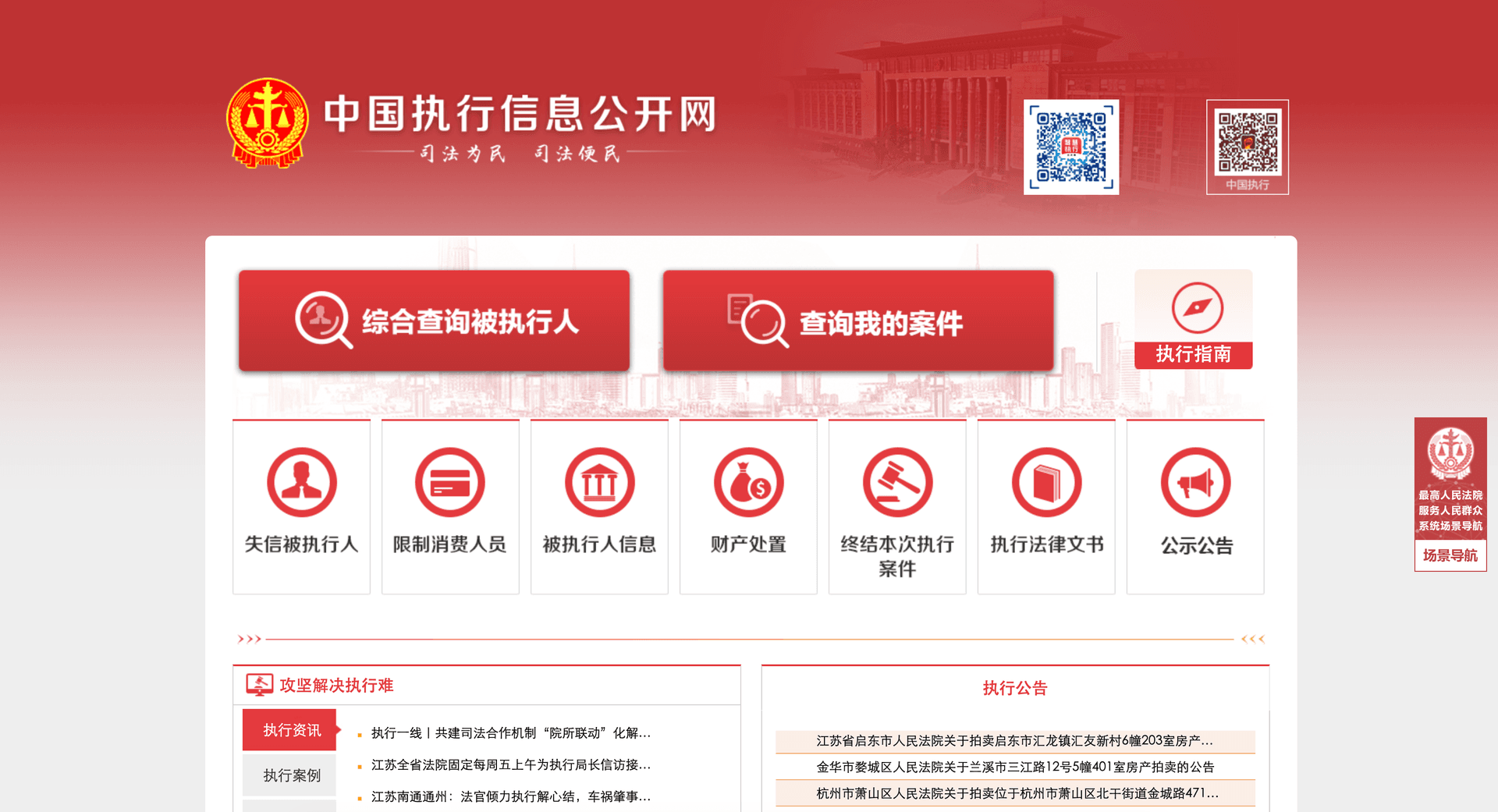
China's enforcement records are published on the Supreme People's Court portal—entirely in Chinese with no English interface. You must search using the company's exact Chinese legal name or Unified Social Credit Code. Foreign businesses cannot easily navigate this system—which is exactly why ChineseCheck was built.
What Are China's 3 Levels of Enforcement Risk?
Understanding enforcement risk in China requires knowing that these three categories are not the same thing—they represent an escalating progression of severity:
Level 1: Executee (被执行人) — Court Enforcement Has Begun
When a court judgment takes effect and the losing party doesn't voluntarily fulfill their obligations (usually paying money), the winning party can apply for enforcement. The company then becomes an "executee"—meaning the court is actively pursuing them for compliance.
When you search for executee records on the China Execution Information Disclosure portal, results show the case number, enforcement court, filing date, and enforcement amount. As shown below, the query returns a list of all active enforcement cases against the company:
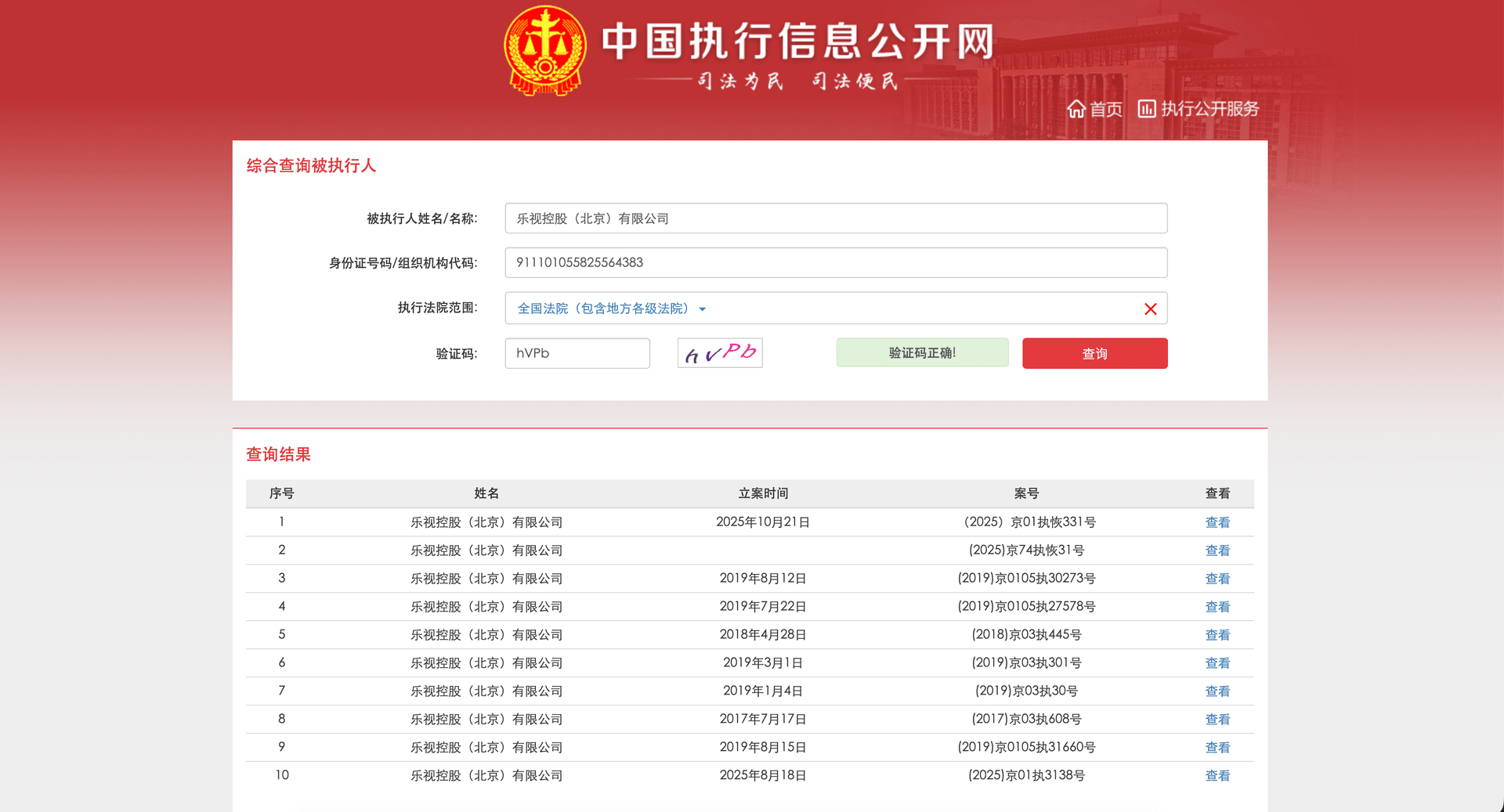
What it signals: A legally binding obligation exists that the company has not fulfilled. This alone is a significant red flag, but it may be a temporary situation (the company might pay soon). Pay special attention to the number and amount of cases—a one-time case might be a business dispute, but repeated records are a serious credit warning.
Level 2: Dishonest Judgment Debtor (失信被执行人) — The "Laolai" Blacklist
If an executee deliberately refuses to comply, evades enforcement, hides assets, or violates reporting obligations, the court can place them on the dishonest judgment debtor list—colloquially known as the "laolai" (老赖) blacklist. This triggers cross-department joint punishment:
- Restricted from government procurement and bidding
- Blocked from obtaining loans and issuing bonds
- Barred from serving as director or senior manager of other companies
- Travel restrictions (no flights, no high-speed rail)
- Public name-and-shame on court websites and media
The dishonest debtor query returns more detailed information than basic executee records, including the specific dishonest conduct, performance status, and publication date—providing richer context for risk assessment:
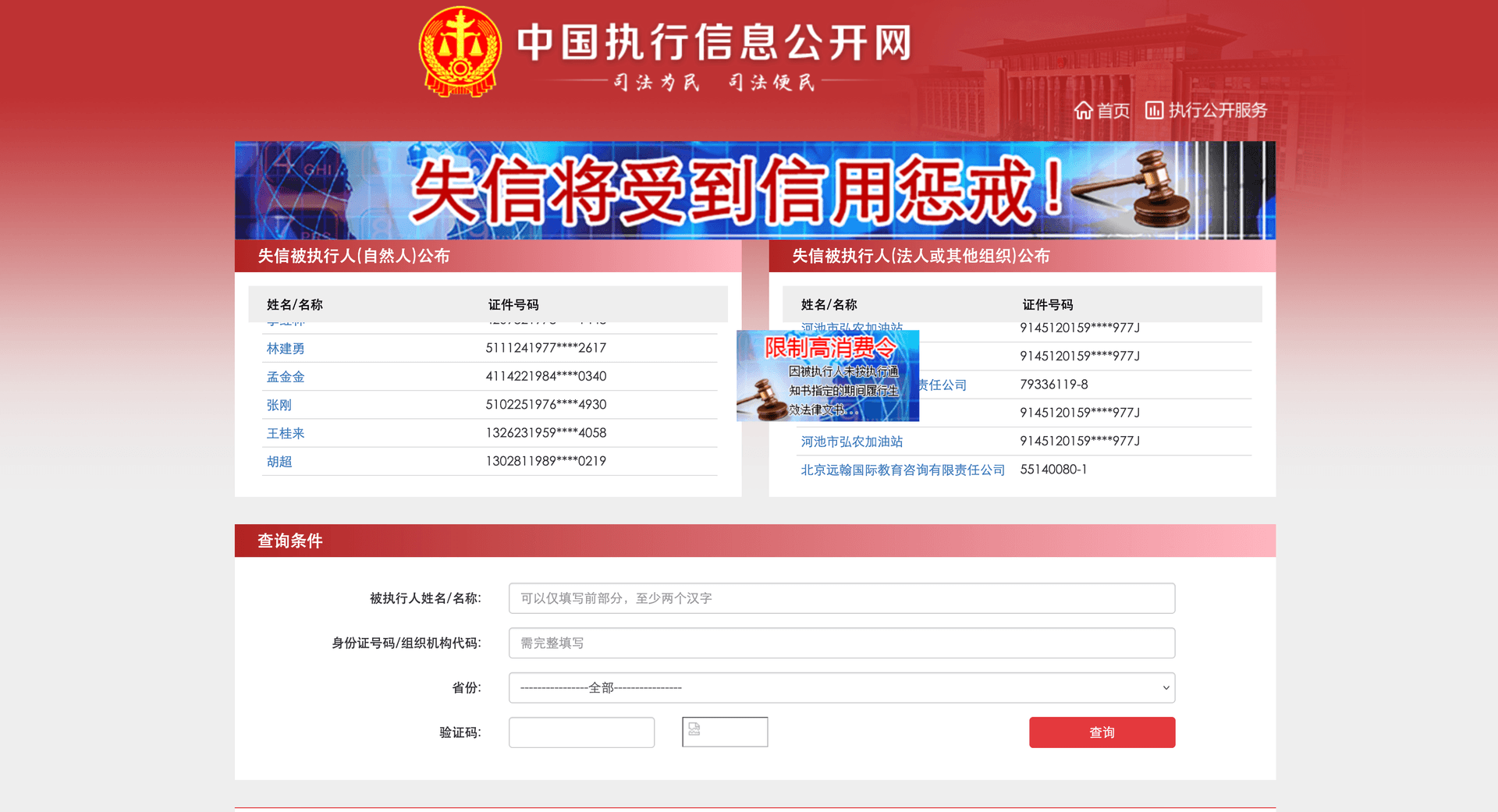
What it signals: The company (or its legal representative) has actively resisted paying what they owe. This is one of the strongest negative signals in Chinese corporate due diligence.
Level 3: Consumption Restriction (限制高消费) — Daily Operations Impaired
Courts can impose high-consumption restrictions on executees who haven't fulfilled their obligations. When applied to a company's legal representative, this means they cannot:
- Fly or take high-speed trains
- Stay at star-rated hotels
- Purchase real estate or vehicles
- Send children to expensive private schools
- Travel abroad (in severe cases)
On the China Execution Information Disclosure portal, consumption restriction query results show the restricted person's name, associated case number, and the date restrictions were imposed:
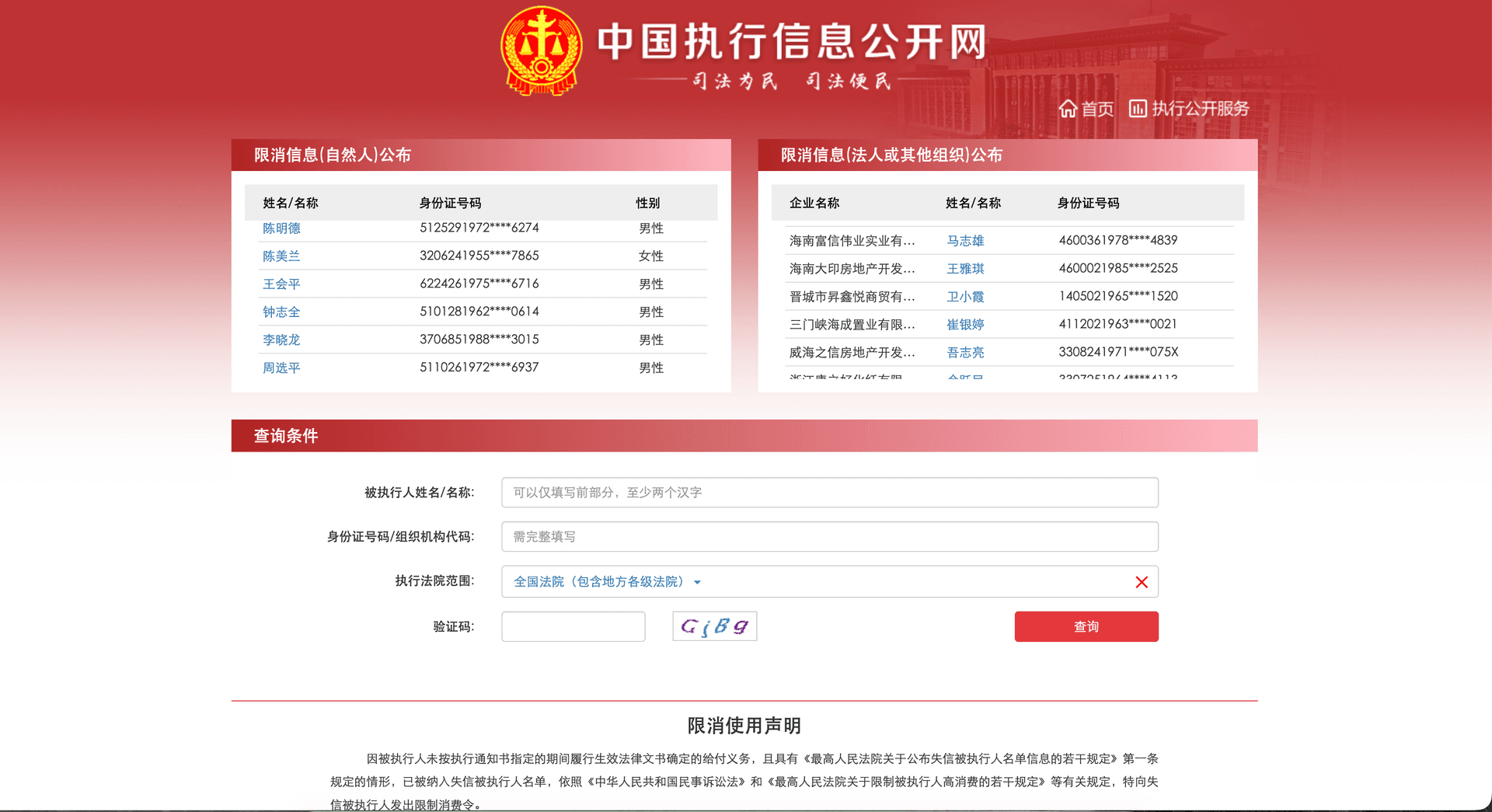
What it signals: The company's key decision-maker faces serious operational constraints. They cannot travel for business meetings, attend trade shows, or conduct normal commercial activities—directly impacting their ability to fulfill contracts with you.
ChineseCheck reports cover all 3 enforcement risk levels
Our comprehensive reports check executee status, dishonest debtor listings, and consumption restrictions—all translated into English with risk analysis and actionable recommendations.
Verify Chinese CompanyWhy Enforcement Records Matter More Than Lawsuits
Many foreign buyers check whether a Chinese supplier has lawsuits—but enforcement records tell you something far more important: whether the company actually pays when it loses.
Consider this progression:
- Company gets sued → Common, not necessarily alarming
- Company loses the case → The court orders them to pay
- Company doesn't pay → They become an "executee" ⚠️
- Company actively evades payment → They become a "dishonest debtor" 🚨
- Legal representative gets restricted → Business operations impaired 🔴
A company with active lawsuits might be perfectly healthy. But a company with repeated enforcement records, dishonest debtor listings, or consumption restrictions is telling you: "We don't pay our debts even when courts order us to."
Real-World Impact: How Enforcement Risk Burns Foreign Buyers
Scenario 1: Prepayment Lost A foreign buyer pays 30% upfront to a Chinese manufacturer. Unknown to them, the manufacturer has multiple active enforcement cases—meaning creditors are already competing for the company's limited assets. The manufacturer fails to deliver, and the buyer's prepayment effectively joins the queue of unpaid debts.
Scenario 2: Key Person Restricted A foreign company signs a distribution agreement with a Chinese partner. The partner's legal representative is under consumption restrictions and cannot fly or travel abroad. Contract negotiations stall, trade show appearances are cancelled, and the partnership becomes unworkable.
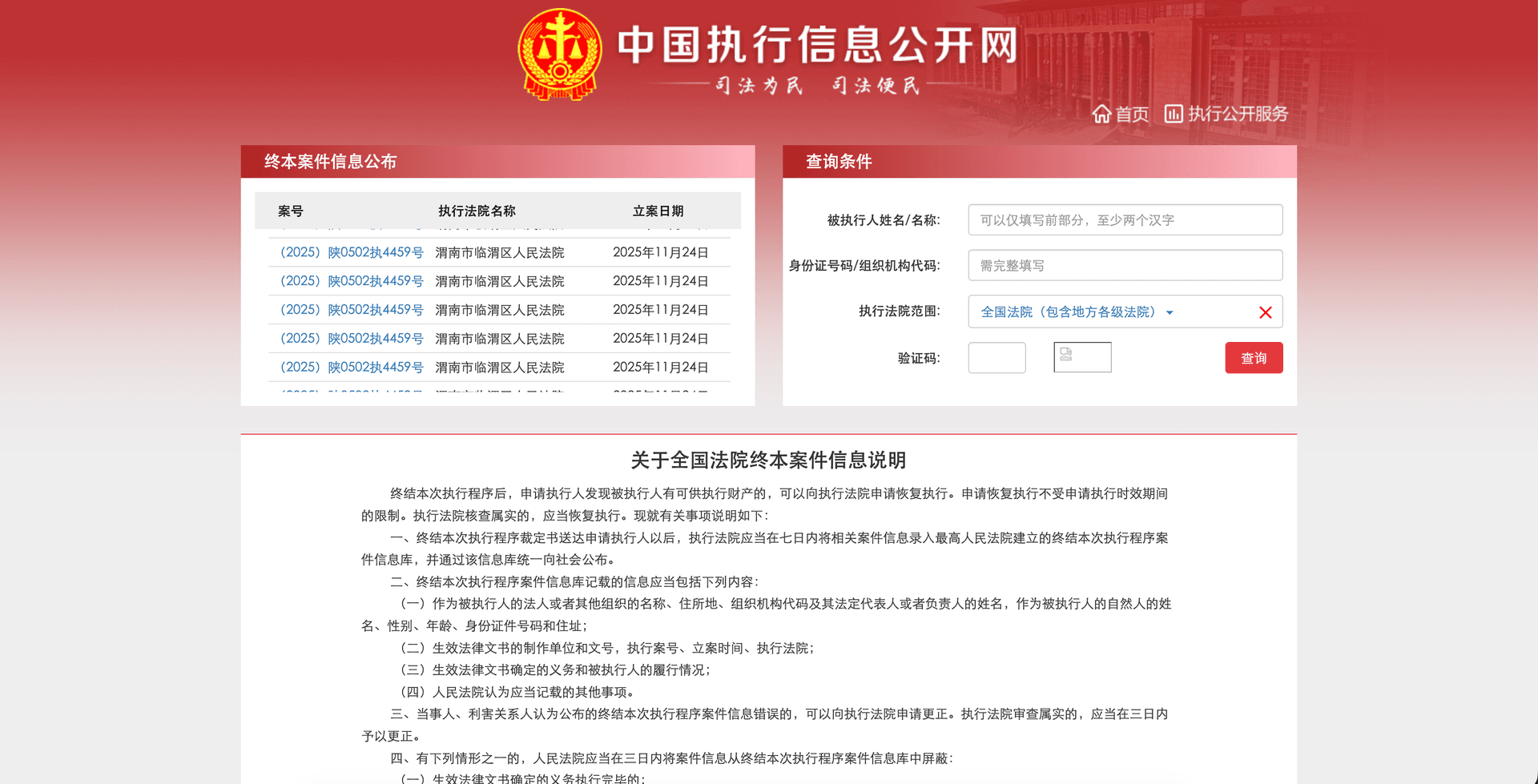
Scenario 3: "Terminated Enforcement" — The Hidden Red Flag The Supreme People's Court portal also tracks "terminated current enforcement" (终本) cases—meaning the court tried to enforce a judgment but found no executable assets. This is often the strongest indicator that a company simply cannot pay its debts, even if it wanted to. Cross-check with tax credit ratings and annual report filings for additional financial health signals.
How to Check Chinese Company Enforcement Records (3 Methods)
Method 1: China Execution Information Disclosure Portal (Official, Free)
The Supreme People's Court operates the official enforcement records portal at zxgk.court.gov.cn. It offers four separate searches:
- Executee search — basic enforcement case information
- Dishonest debtor search — the "laolai" blacklist
- Consumption restriction search — restricted persons
- Terminated enforcement search — cases where no assets were found
Steps:
- Visit
https://zxgk.court.gov.cn/ - Enter the company's full Chinese legal name or Unified Social Credit Code
- Search each of the four categories separately
- Record case numbers, amounts, courts, and dates
Challenges:
- ❌ Entirely in Chinese with no English support
- ❌ Must search four separate categories manually
- ❌ Results show only basic information—need China Judgments Online for case details
- ❌ Must also check affiliated companies and key persons separately
Method 2: Commercial Chinese Business Databases
Platforms like Tianyancha or Qichacha aggregate some enforcement data alongside company profiles.
Limitations:
- ⚠️ Chinese language only, requires Chinese phone number
- ⚠️ Data may lag behind official court portal updates
- ⚠️ No English translation or risk analysis
- ⚠️ May miss "terminated enforcement" cases
Method 3: ChineseCheck Automated Reports
ChineseCheck checks all enforcement risk levels from official sources and presents them alongside 24+ other data dimensions in comprehensive English reports.
- ✅ **No Chinese ID required** - Access from anywhere in the world
- ✅ **All 3 risk levels checked** - Executee + dishonest debtor + consumption restrictions
- ✅ **Plain English** - Chinese legal terms translated and explained
- ✅ **Cross-referenced** - Enforcement data combined with litigation, tax credit, penalties
- ✅ **AI risk scoring** - Identifies enforcement patterns and red flags automatically
The Fastest Way to Check Chinese Company Enforcement Risk
Manually searching China's enforcement records presents significant barriers for foreign businesses:
❌ Language barrier — All portals in Chinese with legal terminology ❌ Fragmented — Must search four categories on the court portal plus cross-check other systems ❌ Incomplete picture — Enforcement data alone doesn't explain why—need litigation context ❌ No risk analysis — Raw data without interpretation of severity or patterns
ChineseCheck solves all these problems with automated, comprehensive reports that include:
- Enforcement records — executee, dishonest debtor, and consumption restrictions from the Supreme People's Court
- Litigation history — the underlying court cases that led to enforcement
- Tax credit ratings — additional financial health indicators
- Administrative penalties — regulatory compliance signals
- Business anomaly status — whether the company is flagged for irregularities
- AI risk analysis — patterns identified and severity assessed automatically
Get a Comprehensive Chinese Company Verification Report
Enforcement records, litigation history, tax compliance, and AI-powered risk analysis—all in one English report available online with PDF download when ready. Generation time depends on data availability; track progress in My checks.
- Ready reports: online viewing and PDF download
- 24+ official government data sources
- Eligible refunds or restored credits under policy; 14-day cash refund window
Conclusion: Check Enforcement Before You Wire Money
In cross-border business with Chinese companies, enforcement records are the single most important legal risk indicator. A company might have lawsuits—that's normal business. But a company that repeatedly fails to pay court-ordered debts, gets blacklisted as a dishonest debtor, or has its legal representative restricted from travel is sending an unmistakable signal about its reliability.
Before wiring prepayments, signing supply contracts, or entering joint ventures, take 5 minutes to check:
- Is the company an executee? — Are there active enforcement cases?
- Is it on the dishonest debtor list? — Has it deliberately evaded court orders?
- Are key persons consumption-restricted? — Can they actually conduct business?
- Are there "terminated enforcement" cases? — Does the company have assets to pay?
These questions can save you from the most common—and most costly—mistakes in China business partnerships. For a complete risk picture, also review litigation records, administrative penalties, and bidding blacklists.
Ready to verify a Chinese company's enforcement status? Search now →