
How to Check Chinese Company Tax Credit Rating: Complete 2026 Guide
By ChineseCheck Team
In cross-border trade, the biggest challenge for foreign businesses working with Chinese suppliers and partners is the risk of non-performance caused by information asymmetry. Many overseas buyers only verify a partner's business license and factory photos, but overlook the most critical indicator of compliance and payment capability published by the Chinese government—the Taxpayer Credit Rating (纳税缴费信用等级). This oversight has led to millions of dollars in losses.
This guide explains China's official taxpayer credit rating system, what each grade means for your business, and—most importantly—how foreign businesses can access this critical information to make informed partnership decisions.
Quick Answer: How to Check Chinese Company Tax Credit Rating
Before signing contracts with a Chinese supplier, checking their tax credit status is essential. Here are 3 ways to do it:
| Method | Access | Cost | Best For |
|---|---|---|---|
| State Taxation Administration (STA) | Only publishes A-grade list; full data requires Chinese ID | Free | Chinese citizens checking A-grade status |
| Provincial Electronic Tax Bureau | Requires company's own login credentials | Free | Companies checking their own rating |
| ChineseCheck | Online when ready; PDF download | $299 | Foreign businesses needing comprehensive reports |
Access Barrier for Foreign Users
China's State Taxation Administration only publicly discloses A-grade taxpayer lists. The complete credit rating (B, M, C, D grades) can only be queried by the company itself through the Electronic Tax Bureau with Chinese mainland ID verification. Foreign users cannot access this data directly—which is exactly why ChineseCheck was built.
For foreign businesses, ChineseCheck is the most practical option because it provides comprehensive tax compliance data alongside 24+ other official data sources, all in English reports.
What is China's Taxpayer Credit Rating System?
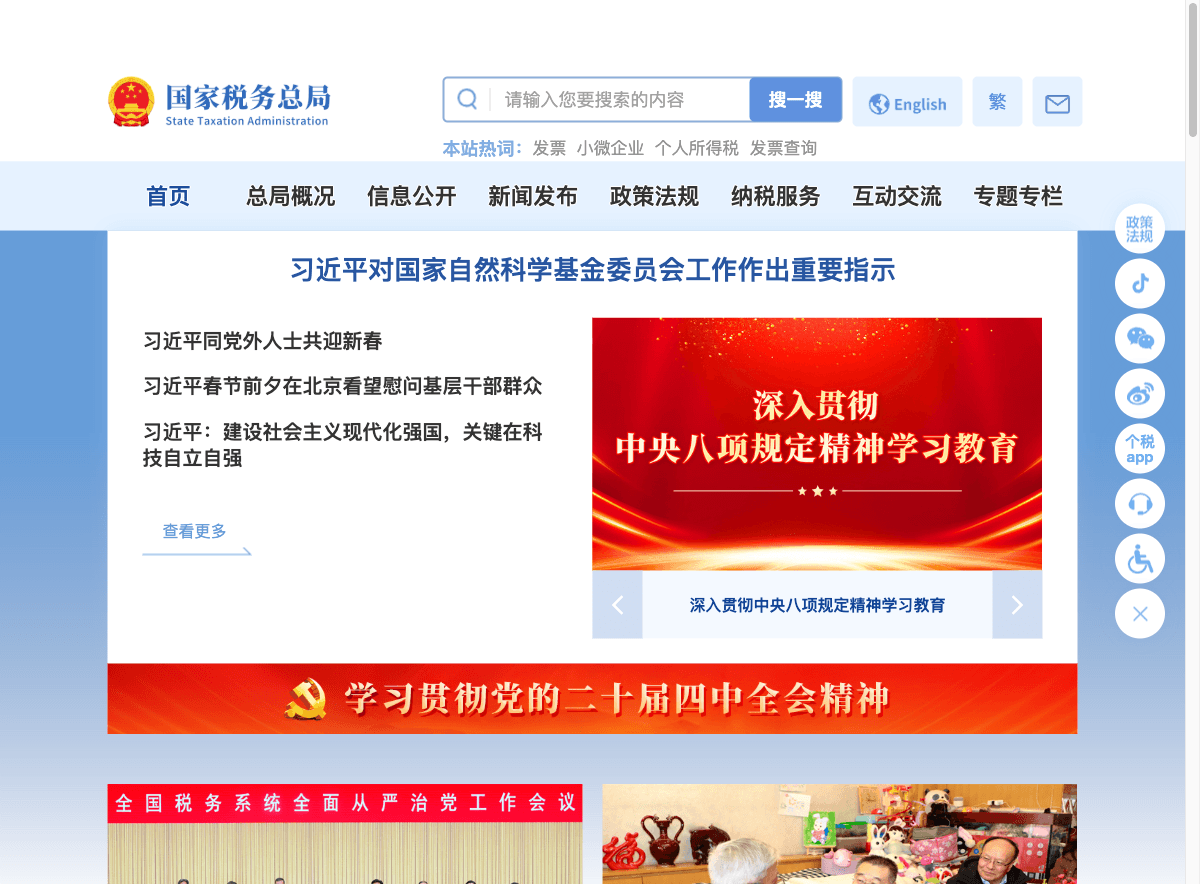
China's Taxpayer Credit Rating (纳税缴费信用等级) is a nationwide, legally mandated credit evaluation system managed by the State Taxation Administration (STA). The current rules are established in STA Announcement No. 12 of 2025, "Measures for Tax Payment Credit Management" (effective July 1, 2025), the highest-authority legal document governing taxpayer credit in China.
How the Rating System Works
The system evaluates companies based on their tax filing compliance, tax payment records, social insurance contributions, and non-tax revenue compliance. It follows four core principles: objectivity, standardized criteria, tiered classification, and dynamic adjustment.
Evaluation Cycle: Ratings are assessed annually (January 1 – December 31), with results published nationwide every April. However, a real-time adjustment mechanism exists—if a company commits serious violations like VAT invoice fraud, tax refund fraud, or major tax evasion, the tax authority can immediately downgrade its rating without waiting for the annual cycle.
Legal Authority: The rating carries official government credibility and is integrated into China's national social credit system, enabling cross-department joint rewards and punishments.
Official Query Portal
The State Taxation Administration's official website provides tax-related services at:
Official URL: https://www.chinatax.gov.cn/chinatax/n810219/n810724/index.html
However, this portal primarily serves Chinese domestic users and requires Chinese language proficiency and local authentication.
Understanding China's A/B/M/C/D Tax Credit Grades
China's taxpayer credit is divided into five grades: A, B, M, C, and D. Each grade directly corresponds to a company's compliance level and business risk—making it a critical screening tool for foreign buyers:
Grade A — Highest Compliance (Score ≥ 90)
What It Means: The company has an excellent tax compliance record with virtually no violations.
Government Incentives:
- Priority invoice allocation (on-demand issuance)
- Expedited tax refund processing
- Multi-department joint incentive programs
- Green channel for administrative approvals
For Foreign Buyers: A-grade companies are the safest partners. Their rating proves stable operations, healthy cash flow, and strong compliance culture. Prioritize A-grade suppliers for large orders.
Grade B — Good Compliance (Score 70-89)
What It Means: The company has a generally good tax record with minor issues that don't rise to the level of serious concern.
For Foreign Buyers: B-grade companies are reliable partners for most business engagements. They demonstrate adequate compliance and operational stability.
Grade M — New or Evaluation-Exempt Entities
What It Means: Typically assigned to newly established companies (within the evaluation year) or entities with limited tax activity that doesn't provide sufficient data for full evaluation.
For Foreign Buyers: Exercise extra caution with M-grade companies for large-value contracts. The lack of established track record means higher uncertainty—consider starting with smaller trial orders.
Grade C — Below Average Compliance (Score 40-69)
What It Means: The company has notable compliance deficiencies, including late filings, underpayments, or other tax irregularities.
Government Restrictions:
- Stricter invoice management
- Enhanced tax audit frequency
- Limited access to certain tax incentives
For Foreign Buyers: Approach with significant caution. C-grade companies often have unstable cash flow and weak internal controls, increasing the risk of delayed delivery, quality issues, or contract non-performance.
Grade D — Serious Non-Compliance (Score < 40 or Direct Determination)
What It Means: The company has committed serious tax violations such as VAT invoice fraud, tax refund fraud, major tax evasion, or persistent tax arrears.
Government Punishments:
- Severely restricted invoice supply
- Strict bank account monitoring
- Restricted access to bank financing
- Legal representative may be banned from leaving China
- Cross-department joint punishment measures
For Foreign Buyers: Absolutely avoid cooperation. D-grade companies cannot guarantee normal business operations, let alone fulfill international contract obligations. Their bank accounts may be frozen at any time — this often leads to enforcement proceedings and litigation.
ChineseCheck includes tax credit data automatically
Our comprehensive reports include tax compliance status, credit rating indicators, tax arrears records, and historical changes—all translated into English with risk analysis.
Verify Chinese CompanyReal Cases: The Cost of Ignoring Tax Credit Ratings
According to the China International Economic and Trade Arbitration Commission (CIETAC), nearly 30% of cross-border contract disputes in 2024 were related to the Chinese partner having abnormal tax credit status or serious tax violations. Two cases illustrate the risks:
Case 1: Malaysian Electronics Buyer Loses $200K
In 2024, a Malaysian electronics procurement company signed a $1.2 million component purchase contract with a Shenzhen electronics firm, paying $360,000 in advance. The buyer only verified the supplier's business license and factory video before signing.
What happened: Just one month after signing, the supplier was immediately downgraded to D-grade by tax authorities for fraudulent VAT invoice issuance. The company's bank accounts were frozen and key executives were banned from leaving China. The supplier could not deliver goods or refund the advance payment.
Result: After 10 months of arbitration, the buyer still could not recover approximately $200,000 in losses.
Case 2: German Home Furnishing Brand Misses Christmas Season
In 2023, a German home furnishing chain signed an annual supply contract with a Zhejiang manufacturer. The buyer only assessed factory capacity, not the supplier's tax credit status.
What happened: The manufacturer was a C-grade taxpayer with chronic tax arrears and filing anomalies, indicating severely unstable cash flow. This led to multiple delivery delays—the longest being 4 months—causing the German brand to miss the European Christmas sales season.
Result: Unsold inventory plus channel penalty fees exceeded €800,000 in losses.
How to Check Chinese Company Tax Credit Status (3 Methods Compared)
Method 1: State Taxation Administration A-Grade Taxpayer List
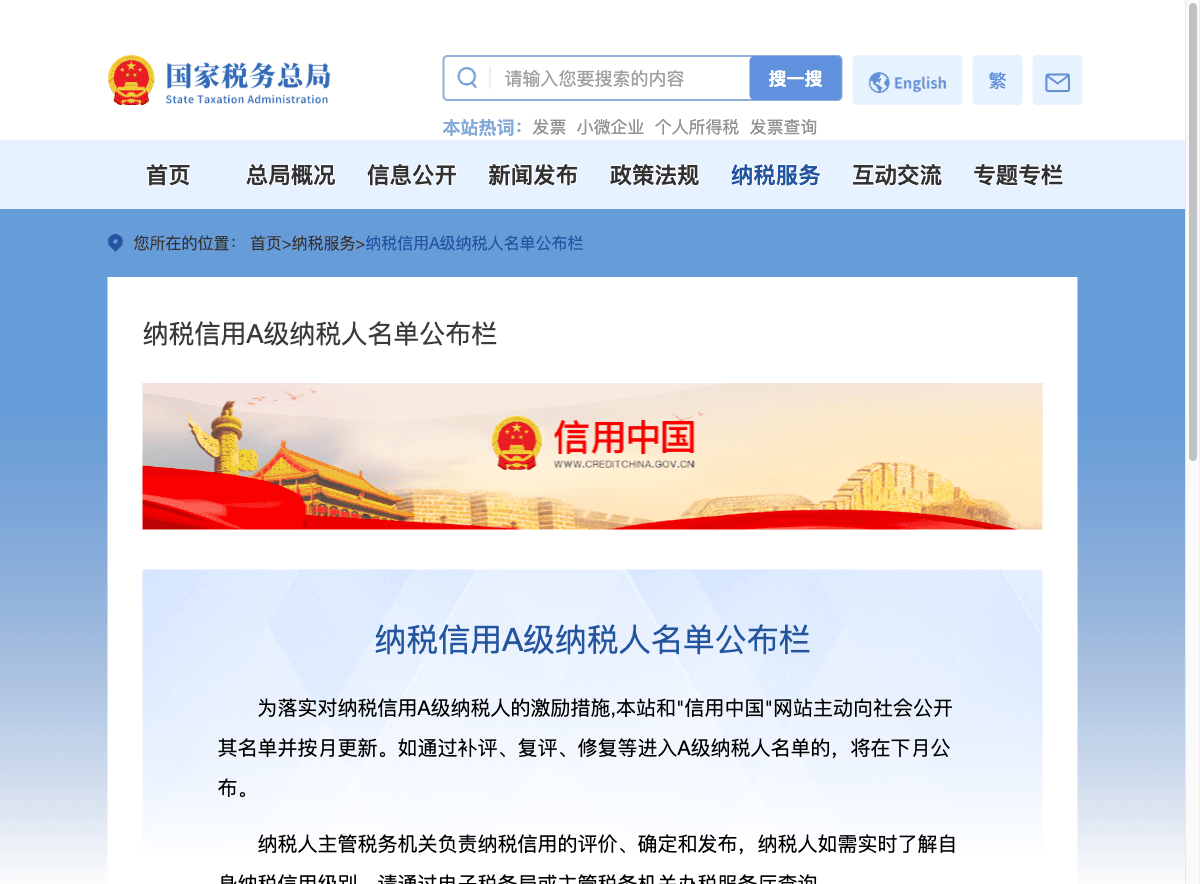
Steps:
- Visit the A-Grade Taxpayer List on the STA website
- Select the relevant province from the list
- Search by company name on the provincial portal
Limitations:
- ❌ Only shows A-grade taxpayers — Cannot check B, M, C, or D ratings
- ❌ Interface entirely in Chinese
- ❌ Fragmented across 30+ provincial portals
- ❌ Absence from the list doesn't tell you the actual rating (could be B, M, C, or D)
Method 2: Electronic Tax Bureau (Company Self-Query Only)
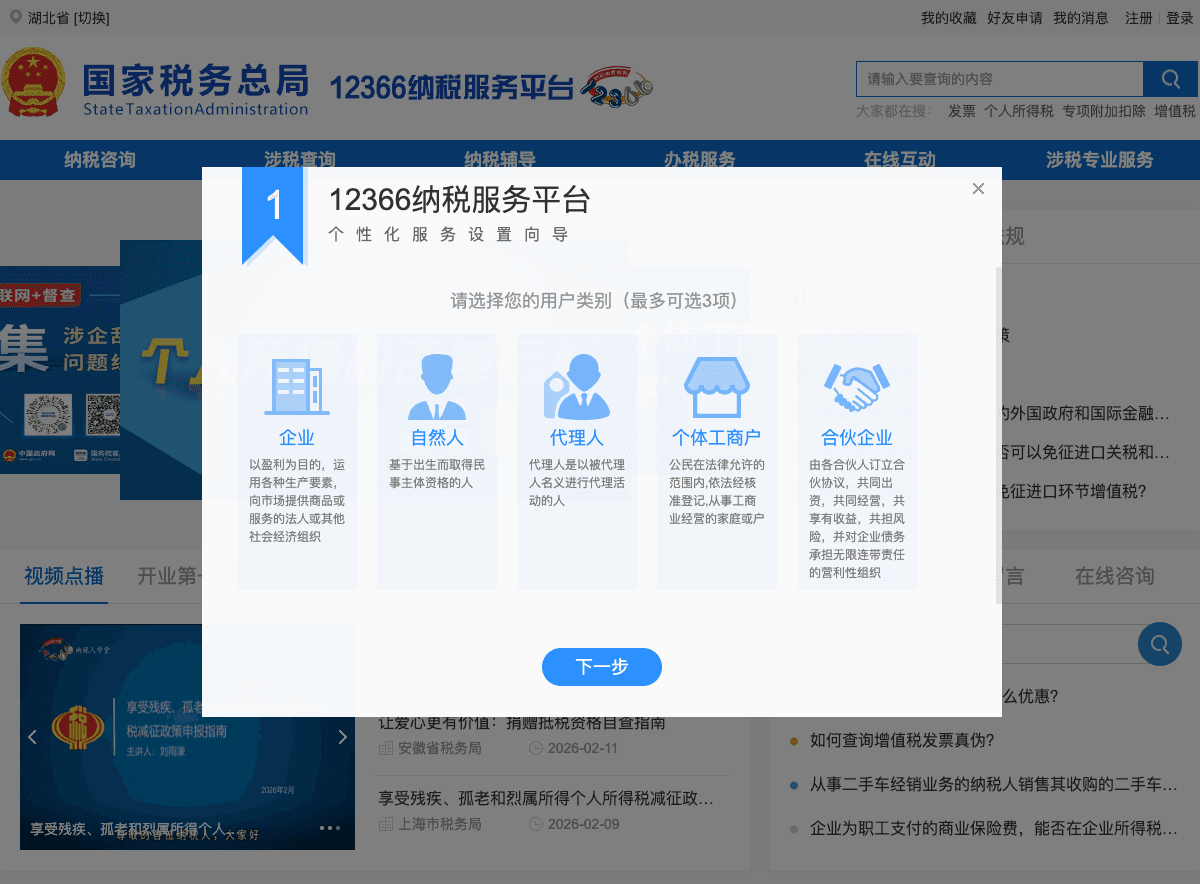
The complete tax credit rating (all grades) can only be accessed through China's Electronic Tax Bureau system.
Steps:
- Visit the provincial Electronic Tax Bureau
- Log in with the company's own tax credentials
- Navigate to "Credit Rating Query"
- View the company's current and historical ratings
Limitations:
- ❌ Only the company itself can query its own rating — Third parties cannot access this data
- ❌ Requires Chinese mainland ID card and business credentials for login
- ❌ Each province has a separate Electronic Tax Bureau portal
- ❌ All interfaces are in Chinese
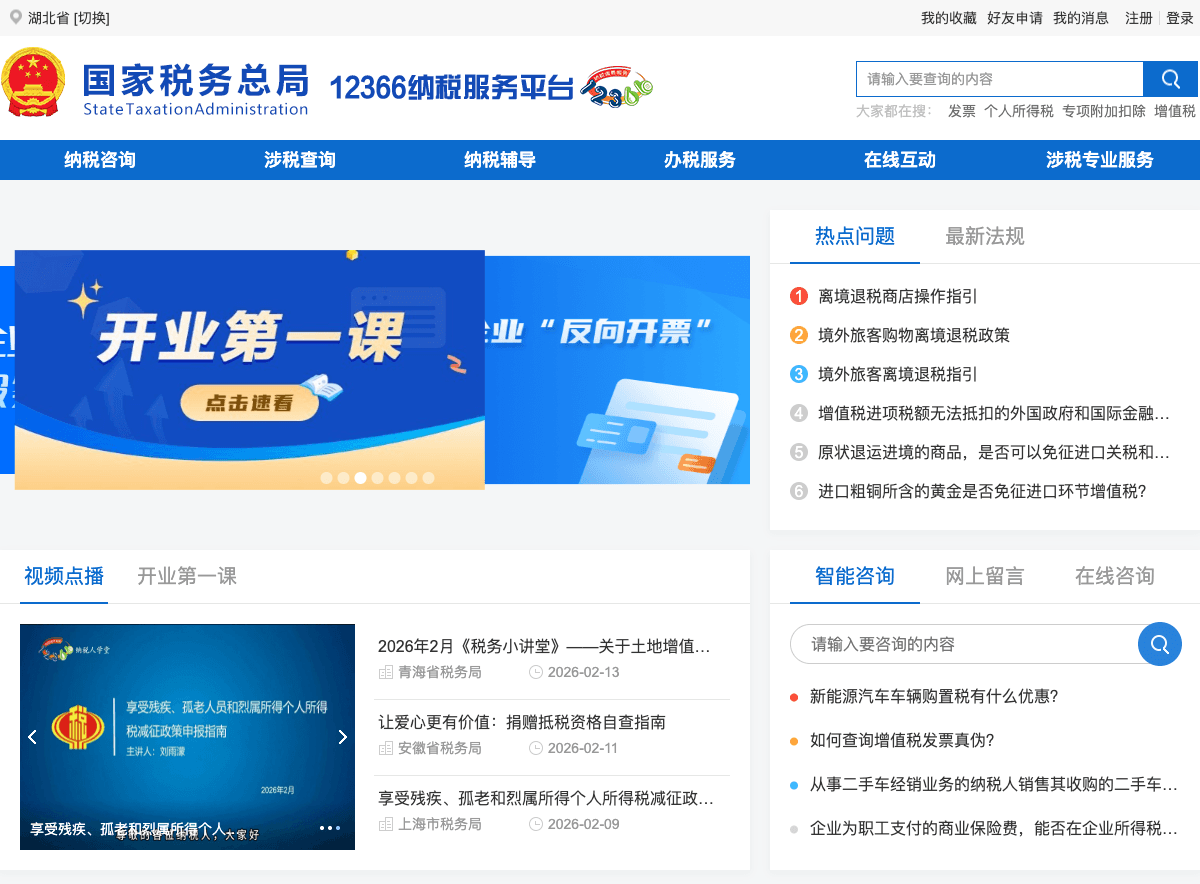
Method 3: ChineseCheck Automated Reports
ChineseCheck aggregates tax compliance data from official sources, cross-referencing tax authority records, credit databases, and public penalty announcements to provide comprehensive tax risk assessment.
- ✅ **No Chinese ID required** - Access from anywhere in the world
- ✅ **Report progress** - Generation time depends on data availability; track progress in My checks.
- ✅ **Plain English** - Tax terminology translated and explained
- ✅ **Comprehensive coverage** - Tax credit + penalties + arrears + 20+ data sources
- ✅ **Risk scoring** - AI analysis identifies tax compliance red flags automatically
The Fastest Way to Verify Chinese Company Tax Compliance
Accessing Chinese company tax credit data is exceptionally difficult for foreign businesses:
❌ Restricted access — Full ratings only available to the company itself ❌ A-grade only — Public disclosure limited to top-rated taxpayers ❌ Language barrier — Complex Chinese tax terminology ❌ Fragmented — Data scattered across 30+ provincial portals
ChineseCheck solves all these problems with automated, comprehensive reports that include:
- Tax credit indicators from tax authority records
- Tax arrears records from public announcements
- Administrative penalties from market regulation authorities
- Business anomaly status from the national registry
- Litigation records from court databases
- Credit blacklist checks across all major lists
- AI risk analysis with actionable recommendations
Get a Comprehensive Chinese Company Tax Credit Report
Tax compliance status, credit ratings, tax arrears, administrative penalties, and AI-powered risk analysis—all in one English report available online with PDF download when ready. Generation time depends on data availability; track progress in My checks.
- Ready reports: online viewing and PDF download
- 24+ official government data sources
- Eligible refunds or restored credits under policy; 14-day cash refund window
Risk Management Recommendations for Foreign Buyers
Pre-Cooperation Checklist
-
Always check tax credit status before signing contracts — Regardless of order size, make taxpayer credit verification a mandatory step in your due diligence process.
-
Prioritize A-grade and B-grade suppliers — These companies have demonstrated consistent tax compliance, indicating stable operations and reliable cash flow.
-
Exercise extra caution with M-grade companies — For newly established companies without track records, limit initial order sizes and require additional guarantees.
-
Reject C-grade and D-grade suppliers — The financial instability and compliance failures indicated by these ratings make them unsuitable business partners for international trade.
Ongoing Monitoring
- Track credit rating changes quarterly for long-term suppliers to detect early warning signs
- Watch for sudden downgrades — An immediate D-grade determination (for invoice fraud or tax evasion) can freeze a company's operations overnight
- Cross-reference with other data sources — Combine tax credit data with litigation records, administrative penalties, and business anomaly status for a complete risk picture
Understanding the "One Violation, Restrictions Everywhere" System
China has established a comprehensive cross-department punishment framework. A D-grade tax rating doesn't just affect tax matters—it triggers restrictions across:
- Government procurement eligibility
- Project bidding qualifications
- Bank loan approvals
- Company director travel restrictions
- Business expansion approvals
This interconnected system means that a company with serious tax violations faces cascading operational challenges that directly impact their ability to fulfill international contracts.
Conclusion: Tax Credit — The Barometer of Chinese Company Health
China's Taxpayer Credit Rating is the most direct "health indicator" of a company's operational status. It reflects not just tax compliance, but overall financial stability, management quality, and business integrity. For foreign businesses engaged in cross-border trade, this rating serves as an essential "firewall" against partnership risks.
ChineseCheck bridges the access gap, providing foreign businesses with comprehensive tax compliance data that would otherwise be completely inaccessible. By making tax credit verification a standard part of your pre-cooperation due diligence process, you can:
- Filter out high-risk partners before signing contracts
- Negotiate better terms based on verified compliance data
- Protect your business from costly supply chain disruptions
- Make data-driven partnership decisions with confidence
The companies that thrive in China trade are those that leverage official credit data for informed decision-making. Tax credit verification is the foundation of building secure, stable, and mutually beneficial business partnerships. For complete risk assessment, combine with litigation records, enforcement history, annual report compliance, and administrative penalties.
Ready to verify a Chinese company's tax compliance status? Search now →